
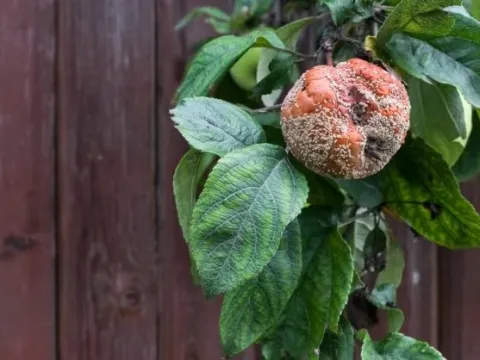
Fruit rot (Monilinia)
Fruit rapidly
The causative agents of Monilinia diseases are fungi of the genus Monilinia, specifically Monilinia fructigena and Monilinia laxa, classified within the Leotiomycetes class.
What the section contains
Fruit rot (Monilinia)
These pathogens overwinter as mycelium in infected mummified fruits, twigs, and cankers that remain on the tree or fall onto the orchard soil.
In spring, the fungus activates under conditions of high humidity and moderate temperatures, releasing spores that initiate the infection cycle.
Spore dissemination is facilitated by wind, rainfall, and insect activity, allowing the fungus to spread rapidly across various cultivars.
The disease life cycle is synchronized with the tree's phenology, which makes preventive treatments during critical growth stages essential for control.
Monilinia affects a wide range of pome and stone fruits, including apples, pears, cherries, plums, and apricots, causing significant economic losses.
Blossom blight destroys flowers and young ovaries, severely reducing the potential harvest before the fruit even begins to develop.
Infection of twigs leads to dieback and necrosis, often giving the branches a scorched appearance that impairs the structural health of the tree.
The fruit rot phase causes rapid decomposition of maturing fruit, rendering crops unmarketable and unsuitable for storage or consumption.
Infected fruits often remain attached to the tree as mummies, providing a constant reservoir for fungal inoculum in the following season.
Initial symptoms include the sudden wilting and browning of blossoms, which remain attached to the twigs instead of falling off naturally.
Shoots and leaves show dark necrotic spots, and in humid conditions, a greyish tuft of fungal sporulation becomes visible on the surface.
Fruits exhibit small brown lesions that expand rapidly, eventually covering the entire fruit surface as it turns into soft rot.
A distinctive feature of this infection is the formation of concentric circles of greyish or yellowish spore pustules on the rotting fruit.
The flesh of the decaying fruit loses its texture and flavor, eventually drying out into a hard, shriveled, and dark mummified state.
Effective management requires strict sanitation: removing and destroying mummified fruits and pruning out infected branches to reduce the inoculum level.
Pruning to ensure proper canopy airflow is crucial, as it reduces local humidity and discourages the conditions favorable for fungal growth.
Chemical control should focus on spray programs during the pink bud stage and immediately after petal fall to prevent the blossom blight phase.
- Application of copper-based fungicides in early spring.
- Use of systemic fungicides throughout the growing season.
- Management of pests that create entry points for fungal spores.
Sanitary measures in autumn, including clearing debris and trunk cleaning, are vital to minimize the risk of the pathogen surviving until the next year.