
Endoconidiophora fimbriata
Endoconidiophora fimbriata
Endoconidiophora fimbriata, often classified as Ceratocystis fimbriata, is an ascomycete fungus notorious for causing severe diseases in various agricultural and horticultural crops worldwide.
What the section contains
Endoconidiophora fimbriata
The fungus produces two types of spores: endoconidia and ascospores. These are formed in specialized fruiting bodies known as perithecia, which are characterized by long necks that facilitate spore dispersal.
This pathogen is highly adaptable and can persist in soil for extended periods, remaining viable in infected plant debris until a suitable host becomes available.
It is classified within the Microascales order. Its ability to penetrate deep into the xylem of host plants often leads to systemic vascular infections that are difficult to eradicate.
Identification typically involves mycological culture on selective media, where the fungus displays distinct growth patterns, often accompanied by the production of characteristic black pigments.
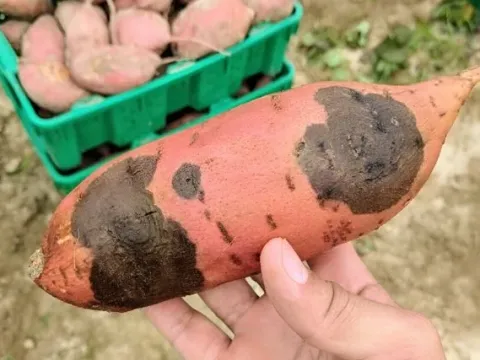
The most prominent economic impact of Endoconidiophora fimbriata is the black rot disease of sweet potatoes, which causes devastating losses in both field production and storage facilities.
Beyond sweet potatoes, the pathogen exhibits a broad host range, attacking crops like cacao, coffee, citrus, and various ornamental trees, where it causes wilt and dieback symptoms.
The pathogen destroys vascular tissues, hindering the transport of water and nutrients. In tuberous crops, it consumes the starch reserves, rendering the produce bitter and inedible.
In woody plants, the fungus causes cankers on stems and branches. These cankers can eventually girdle the stem, leading to the death of the entire plant above the point of infection.
The pathogen is highly transmissible, and even a small number of infected tubers can ruin an entire batch during post-harvest storage due to rapid spread in humid conditions.
The primary symptom on sweet potato roots is the formation of dark brown to black, slightly sunken lesions that expand over time and have well-defined, darker margins.
Under humid conditions, the surface of these lesions may become covered with a grayish-white, velvety growth consisting of the fungus's conidiophores and spore masses.
Above-ground symptoms in susceptible plants include foliage chlorosis, wilting of the stems, and premature leaf drop, as the plant struggles to maintain hydraulic integrity.
When infected storage roots are sliced open, the internal flesh shows a distinct blackening or browning that spreads deep into the center of the tuber, indicating advanced infection.
On tree stems, infection often results in sunken lesions or cracks in the bark, sometimes accompanied by an exudation of sap or gum, which is a stress response of the tree.
Effective management relies on strict sanitation protocols, ensuring that only disease-free planting material is used and that fields remain free of contaminated debris.
Crop rotation is essential for breaking the infection cycle. Avoiding the cultivation of host plants on the same site for several years helps significantly reduce soil-borne inoculum.
Post-harvest hygiene is critical; curing roots properly and maintaining adequate ventilation in storage prevents the rapid transmission of spores between individual units.
Chemical control focuses on treating planting material with fungicides to provide a protective barrier against primary infection during the critical early growth stages.
- Selection of resistant varieties as the primary line of defense.
- Removal and destruction of infected plant debris to prevent soil contamination.
- Sanitation of tools and equipment to prevent mechanical transmission of the pathogen.