
Elm leaf spot
Stegophora ulmea
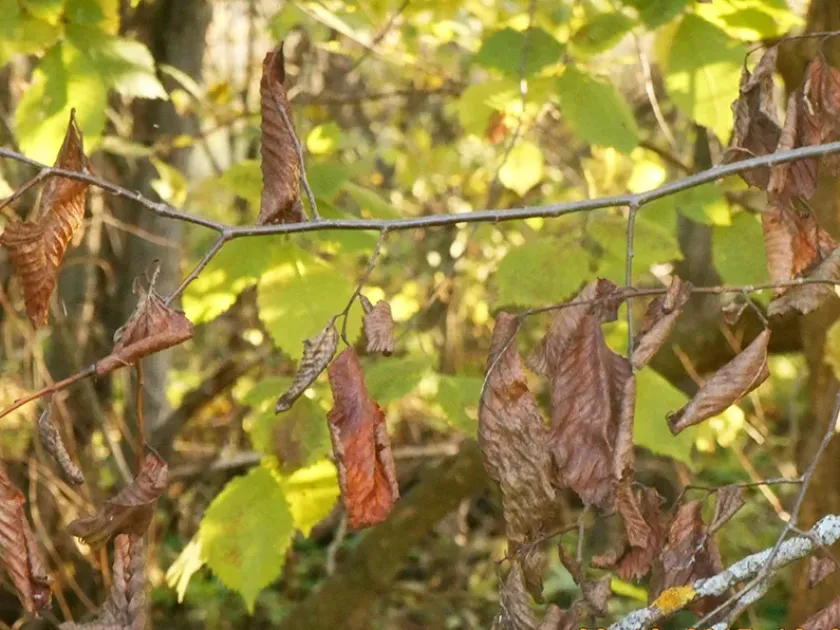
Description
How to identify
Elm leaf spot is a fungal disease caused by the ascomycete Stegophora ulmea (synonym Gnomonia ulmea). This pathogen belongs to the order Diaporthales and is a specialized parasite affecting various species of the Ulmus genus.
The pathogen completes its lifecycle on fallen leaves, where fruiting bodies known as perithecia are formed. In spring, ascospores mature within these bodies and are dispersed by wind and rain splashes to infect newly emerging leaves.
The fungus colonizes leaf tissues, causing the formation of necrotic spots where conidial (asexual) and sexual spore stages later develop. This allows the pathogen to actively reproduce throughout the entire growing season.
The mycelium develops within the leaf tissues, gradually breaking down epidermal and mesophyll cells. The pathogen is highly dependent on humidity, making disease outbreaks more frequent during prolonged periods of rainfall and high relative humidity.
The progression of the disease is closely tied to the phenological phases of the elm. Initial symptoms typically appear shortly after leaf unfolding, making early diagnosis crucial for assessing the condition of tree populations.
What it damages
The primary hosts are various elm species, including smooth-leaf elm, wych elm, and other ornamental varieties. Young trees in nurseries and saplings in urban landscapes are particularly vulnerable.
The disease affects the leaf blades, leading to premature yellowing and leaf drop. In cases of severe infection, the tree canopy can become significantly thinned by mid-summer, which detracts from its ornamental value.
Chronic infection with Stegophora ulmea negatively impacts photosynthetic processes. Weakened trees are less capable of surviving harsh winters and become more susceptible to secondary pathogens and pests, leading to gradual decline.
In young saplings, early defoliation inhibits shoot growth. If epidemics occur year after year, it leads to general suppression of the plant and may even cause the dieback of individual branches.
In forestry and landscaping, the economic impact is manifested in the loss of aesthetic appeal of nursery stock and the requirement for costly protective measures to maintain the health of the tree stands.
When it appears
The first signs of infection appear in the spring, immediately after the growth of new shoots begins. This is when primary infection occurs via ascospores that overwintered in the leaf litter from the previous year.
The peak of disease development occurs in the second half of summer when conidia are formed on infected areas. High humidity levels in July and August promote the mass spread of infection within the canopy.
In the autumn, the fungus enters the perithecia formation stage on fallen leaves. In this state, the pathogen successfully survives low winter temperatures, maintaining its viability until the following spring.
Thus, the disease cycle spans the entire growing season, entering a dormant phase alongside leaf fall. Optimal conditions for infection include moderately warm weather with frequent precipitation.
Monitoring tree health should be conducted during May and June to identify initial infection centers and implement prompt actions to prevent secondary contamination.
Signs of infestation
Small, circular spots of light brown or yellowish color form on the surface of young leaves, eventually darkening to a deep brown or black hue.
A characteristic sign is the presence of small black dots (acervuli) that densely cover the surface of the necrotic areas. These are the fruiting structures of the fungus, easily visible to the naked eye.
As the pathogen develops, spots may coalesce, covering a significant portion of the leaf blade. The leaf begins to curl, wither, and drop prematurely, despite adequate soil moisture.
- Appearance of small black spots on leaf veins and tissue.
- Yellowing of foliage in early stages (June-July).
- Presence of black, raised spots (fruiting bodies) on infected zones.
- Premature leaf drop while branches remain turgid.
- Reduction in total tree canopy density.
Symptoms may manifest unevenly, appearing first on lower branches where air humidity is higher and conditions for spore germination are most favorable.
Control measures
The primary cultural control method is the thorough raking and removal of fallen leaves in the autumn. This drastically reduces the primary inoculum for the following year, as the fungus overwinters specifically in leaf debris.
In nurseries and public parks, preventative fungicide spraying during the growing season is recommended. The first application should be performed immediately after bud break, with a second application upon the first sign of disease.
For chemical protection, copper-based products (such as Bordeaux mixture) and systemic broad-spectrum fungicides permitted for forestry and amenity tree use are effective.
An important aspect of tree care is maintaining high cultural standards: timely fertilization, adequate watering, and ensuring good canopy aeration through regular sanitary pruning of dead or diseased branches.
Creating conditions that allow for better air circulation reduces humidity in the root zone and on the leaves, making it impossible for pathogen spores to germinate. When selecting planting stock, preference should be given to resistant elm species and cultivars.
Causes diseases · 1
Discussion
No discussions yet — be the first.