
Elsinoe mangiferae
Elsinoe mangiferae
Elsinoe mangiferae is an ascomycete fungus that acts as the primary pathogen responsible for mango scab, a widespread disease in tropical fruit production.
What the section contains
Elsinoe mangiferae
The fungus is classified within the Elsinoe genus and primarily affects the epidermal tissues of susceptible Mangifera indica varieties.
Its life cycle involves the formation of asexual conidia during the growing season, which serve as the primary inoculum for spreading the infection between trees.
The pathogen utilizes specialized structures called stromata, which allow the fungus to persist in infected plant debris during unfavorable dry seasons.
Laboratory identification of this pathogen usually involves observing the morphology of its conidia or its specific stromatic growth patterns on host tissues.
This fungus causes significant damage to the commercial quality of mangoes, rendering infected fruits unmarketable due to severe skin deformities.
The pathogen attacks various plant organs, including young leaves, petioles, twigs, and floral panicles, causing localized tissue necrosis.
Floral infection is particularly devastating, as it frequently results in the complete loss of fruit sets if left untreated during the critical flowering stage.
Severe infestations on young leaves lead to distortion and premature abscission, which reduces the overall photosynthetic capacity of the entire tree.
In addition to cosmetic damage, the formation of scabs and cracks on twigs creates pathways for secondary decay organisms to enter the wood.
The development of Elsinoe mangiferae is highly dependent on environmental conditions, specifically high relative humidity and frequent rainfall.
Primary infection peaks during the transition from the dry season to the wet season, coinciding with the flowering and fruit-set stages of mango trees.
Water droplets from rain or heavy dew facilitate the germination of conidia, allowing the pathogen to penetrate the young, susceptible plant cuticle.
During prolonged dry periods, the fungus survives in a dormant state within mummified fruits, old lesions on leaves, or cracks in the tree bark.
The disease spreads most rapidly when temperatures are moderate to warm and moisture levels are consistently high for several consecutive days.
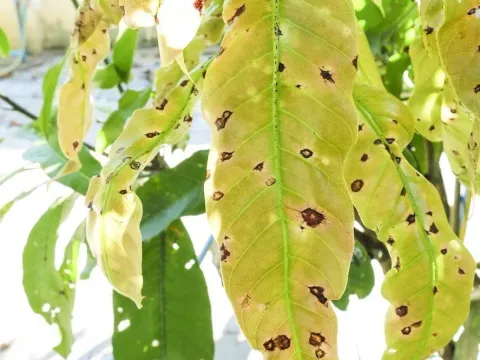
Initial symptoms manifest as small, dark brown spots that gradually enlarge and often develop a velvet-like appearance due to fungal sporulation.
- Circular to irregular dark lesions on fruit skin.
- Cracking of fruit peel due to inhibited tissue growth.
- Distorted and stunted growth of young leaves.
- Blackening and withering of floral panicles.
- Cork-like scabs on twigs and stems.
As the fruit matures, the lesions may coalesce, leading to severe cracking and allowing secondary bacteria or fungi to cause fruit rot.
The scabs often turn grayish-brown with age, and their surface may become crusty as the underlying plant tissue reacts to the infection.
Effective management begins with strict orchard sanitation, including the removal and destruction of infected pruning materials to reduce the inoculum load.
Pruning should be focused on improving air circulation through the tree canopy, which promotes faster drying and creates a less favorable environment for the fungus.
Preventive fungicide sprays, particularly those containing copper, are essential during the pre-flowering and fruit-set stages to protect young tissues.
Selecting resistant mango cultivars is a key long-term strategy for reducing dependency on chemical control measures in regions with high disease pressure.
Monitoring for the first signs of floral infection allows for timely intervention, preventing the spread of the pathogen to the developing fruit crop.