
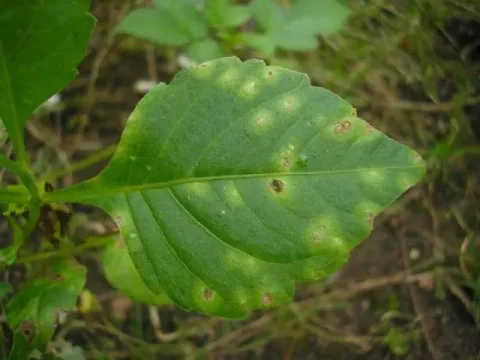
Entyloma compositarum
Entyloma compositarum
Entyloma compositarum is a highly specialized fungal plant pathogen belonging to the class Exobasidiomycetes and the order Ustilaginales (smut fungi). It is an obligate parasite primarily targeting plants within the Asteraceae family.
What the section contains
Entyloma compositarum
Systematically, this organism is categorized as a cause of localized leaf spot diseases. Unlike many other smut fungi that form massive, easily visible sori, this species produces teliospores hidden within the host plant's leaf tissues.
The fungus’s life cycle involves survival as teliospores on crop debris or in the soil throughout the winter. When conditions become favorable, these spores germinate, producing basidiospores that infect healthy tissue.
Transmission occurs through the dispersal of spores by wind, water splashes, or agricultural tools. These mechanisms allow the pathogen to spread efficiently across a field during periods of high humidity and moderate temperatures.
Development is tightly linked to environmental factors. The pathogen thrives in environments where there is persistent moisture on the leaf surface, which is essential for the germination of spores and the subsequent penetration of the host epidermis.
The fungus affects a broad range of both ornamental and wild Asteraceae species. In agriculture, it is known to cause significant damage to asters and dahlias, as well as various weeds that act as reservoirs for the fungus.
The primary impact is the loss of functional leaf area. By parasitizing the cells, the fungus disrupts normal metabolism and inhibits photosynthesis, leading to the overall weakening and stunted growth of the plant.
Severe infestations result in premature leaf drop. For decorative plants, this represents a major economic loss as the plant loses its aesthetic value, making it unsuitable for commercial sale or garden use.
Plants affected by the fungus are inherently weaker, making them susceptible to secondary bacterial or fungal infections and less resilient against abiotic stresses such as drought or nutritional deficiencies.
In years with optimal weather conditions for the pathogen, the lack of timely intervention can lead to devastating results, with infection rates significantly reducing the vitality and longevity of plant collections.
Initial infection symptoms manifest as small, rounded, or angular spots on the foliage. These lesions are typically light green, yellow, or tan in color during the early stages of the disease.
As the pathogen matures, the underside of the leaf often develops a fine, grayish moldy growth, consisting of conidia or spores. This sign is most visible during the early morning when humidity levels are at their peak.
In time, the infected tissue becomes necrotic, dry, and brittle. These spots may eventually drop out, creating a characteristic 'shothole' effect on the leaves, further aggravating the reduction in the leaf surface area.
The disease usually progresses from the bottom of the plant upwards, as the lower leaves typically experience higher humidity and reduced airflow, creating the perfect niche for the fungus to establish itself.
Differential diagnosis can be challenging as the symptoms may resemble other fungal leaf spots. Accurate identification often requires microscopic examination to confirm the presence of Entyloma teliospores within the leaf lesions.
Sanitation is the cornerstone of Entyloma control. It is vital to remove and destroy all infected plant debris at the end of the growing season to prevent the buildup of inoculum in the soil for the following year.
Implementing a rigorous crop rotation schedule is essential. Asteraceous crops should not be replanted in the same location for at least 2–3 years, which effectively starves the soil-borne spores and breaks the infection cycle.
Managing the plant environment is equally important. Improving airflow through proper spacing, ensuring good drainage, and using drip irrigation instead of overhead watering can significantly lower the risk of infection.
Chemical control involving systemic fungicides is effective when applied upon the first signs of disease. Products containing copper, triazoles, or strobilurins are commonly used to provide protection and stop the spread of existing infections.
Using healthy, disease-free planting material is a critical preventative measure. Furthermore, diligent weed control is necessary to eliminate alternate host species that might harbor the pathogen near the main crop area.