
Elm yellows
Elm yellows
Elm yellows is a systemic disease caused by the phytoplasma Candidatus Phytoplasma ulmi. This is a specialized prokaryotic organism lacking a cell wall that colonizes the phloem sieve tubes of host trees.
What the section contains
Elm yellows
The pathogen belongs to the class Mollicutes. Due to the absence of a cell wall, it is highly sensitive to environmental conditions and cannot survive outside the host plant or its specific insect vectors.
The primary natural vectors for the transmission of the pathogen are leafhoppers, most notably Scaphoideus luteolus. These insects acquire the phytoplasma while feeding on infected trees and transmit it to healthy ones during subsequent feeding sessions.
In addition to insect vectors, the disease is transmitted through root grafts between adjacent trees, which often leads to the formation of localized infection clusters in forests and urban areas.
The phytoplasma interferes with the plant's nutrient transport system, leading to the starvation of tissues and the eventual death of the tree, usually within a few years of initial infection.
The disease affects various species of the genus Ulmus, with American elm and red elm being particularly susceptible. The degree of damage varies depending on the species' intrinsic resistance.
Elm yellows impacts both wild forest populations and ornamental elm plantings in city landscapes, causing significant aesthetic loss and damage to ecosystem services provided by mature trees.
In nursery settings, the pathogen represents a severe threat. High planting density significantly increases the efficiency of insect-mediated transmission and facilitates root graft infections.
Infection of saplings typically results in rapid decline, which renders infested nursery stock unfit for sale or planting in restoration projects, causing direct economic losses.
Managing the disease requires expensive removal and disposal of infected trees to prevent further spread, placing a financial burden on forest services and municipal authorities.
The most common initial symptom is the yellowing (chlorosis) of leaves, which often appears mid-summer. This is frequently accompanied by premature leaf drop and gradual canopy thinning.
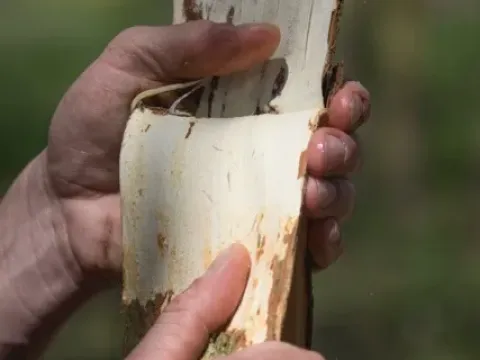
Phloem necrosis is a critical diagnostic sign. When a section of bark is removed from the base of the trunk or main branches, the inner bark typically exhibits a reddish-brown or cinnamon discoloration.
A distinctive wintergreen odor can be detected when fresh bark from infected trees is cut, which serves as a reliable field diagnostic method for identifying the presence of the pathogen.
Infected trees may show reduced annual growth and, in some cases, the development of «witches' brooms»—dense clusters of stunted shoots resulting from hormonal disruption caused by the phytoplasma.
Tree death can occur suddenly within a single season or progress over several years, while the roots may remain alive for a period after the aerial portion of the tree has succumbed.
There is currently no cure for elm yellows, making preventive measures and the containment of infected sites the only viable management strategy for arborists and foresters.
The most important step in controlling the disease is the immediate removal and destruction of infected trees, including their stumps, to disrupt potential root graft transmission.
Managing leafhopper populations using registered insecticides can reduce the spread of the pathogen in high-value ornamental landscapes or nurseries where the risk of transmission is high.
- Regular monitoring of tree health during the growing season.
- Sourcing certified disease-free nursery stock for new plantings.
- Maintaining tree vigor through proper watering and fertilization to mitigate stress.
The most effective long-term solution is the selection and planting of elm species and cultivars known to be resistant or tolerant to elm yellows, which prevents the establishment of the disease.