
Curvularia lunata
Curvularia lunata
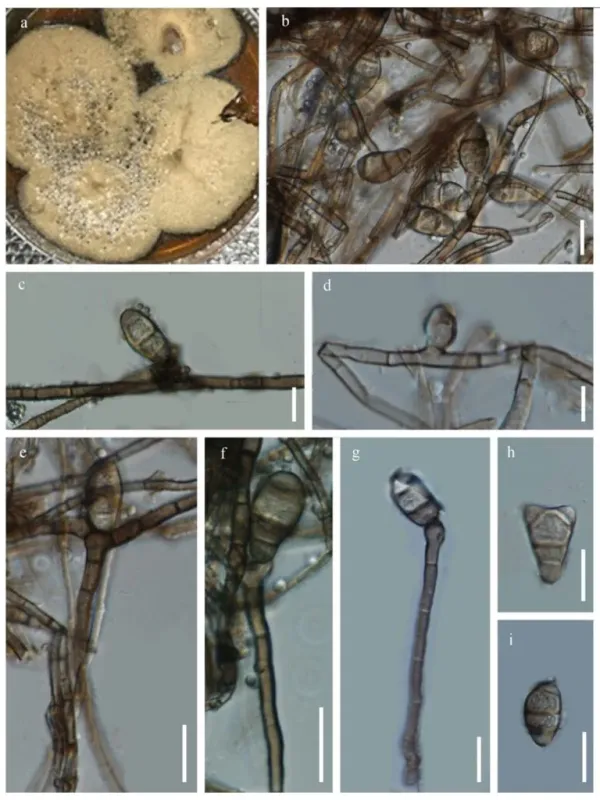
Description
How to identify
Curvularia lunata is a fungus belonging to the kingdom Fungi and the phylum Ascomycota. It is a well-known plant pathogen with a broad host range, often found in tropical and subtropical agricultural environments.
The fungus is characterized by the production of dark, septate mycelium and curved, multicelled conidia. The central cell of the conidium is typically swollen and darker, which is a key morphological feature for microscopic identification.
This pathogen reproduces primarily through asexual conidia. These spores are easily dispersed by wind and splashing rain, allowing the fungus to colonize new plant tissues efficiently.
It acts as a facultative parasite, capable of surviving as a saprophyte on decaying plant matter when a suitable living host is not immediately available.
Due to its rapid growth in artificial media, it is frequently isolated during phytosanitary inspections and is recognized as a significant seed-borne pathogen.
What it damages
Curvularia lunata affects numerous economically important crops, including maize, wheat, rice, sorghum, and various turf grasses. It is a versatile pathogen that attacks different plant organs.
In seedlings, the pathogen causes severe damping-off and root rot, leading to poor crop establishment and reduced plant density in the field.
In mature plants, it causes leaf spot diseases, stem rot, and grain discoloration. These infections weaken the plant, disrupt photosynthesis, and ultimately reduce grain weight and quality.
Seed-borne infection is particularly dangerous as it reduces germination rates and introduces the pathogen into new, previously disease-free fields.
Post-harvest damage is also a concern, as the fungus can cause rot in stored grains and vegetables if moisture levels are not strictly controlled.
When it appears
The fungus thrives in warm and humid conditions, with an optimal growth temperature ranging between 25°C and 30°C. It is most active during the peak growing season.
High relative humidity and frequent rainfall are the primary drivers of epidemics, as they facilitate the germination of conidia on the host plant surface.
The pathogen survives the off-season as mycelium or chlamydospores in plant debris or in the soil, ready to infect the next cycle of crops when conditions become favorable.
The development cycle is relatively short, meaning that under favorable weather, multiple generations of spores can be produced within a single growing season.
Periods of heavy dew and frequent atmospheric moisture in summer are often associated with the rapid spread of the disease across cereal fields.
Signs of infestation
The initial symptoms usually appear as small, chlorotic spots on leaves that gradually enlarge and turn dark brown or black in color.
As the infection progresses, a velvety, black or dark grey layer of mycelium and spores becomes visible on the necrotic tissue, which is diagnostic for this fungus.
- Darkening and rotting of seedling roots and stems.
- Irregular necrotic spots on leaves, often leading to premature leaf senescence.
- Discoloration of grains, often referred to as "black kernel."
- Stunting of plant growth due to compromised vascular systems.
If the infection reaches the stem base, it may cause the plant to wilt or lodge, particularly in crops like corn and sorghum.
Control measures
Implementing a strict crop rotation program is essential to disrupt the survival of the pathogen in the soil and on crop residues.
Seed treatment with systemic fungicides is a crucial step to protect young plants during the germination and early seedling development stages.
Effective sanitation, including the destruction or deep incorporation of crop residues into the soil, helps reduce the initial inoculum level.
Optimizing plant nutrition, especially balancing nitrogen levels, makes plants less susceptible to opportunistic pathogens like Curvularia lunata.
Foliar application of fungicides containing azoles or strobilurins is recommended if environmental conditions favor the rapid development of the disease during the vegetative growth phase.
Causes diseases · 1
Discussion
No discussions yet — be the first.