
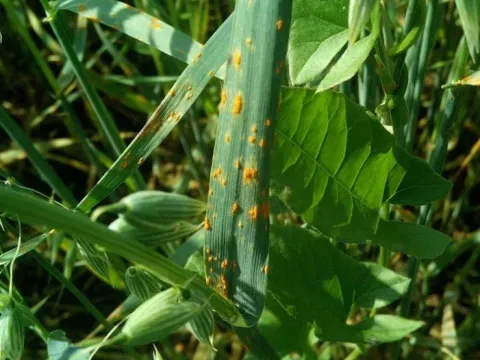
Crown rust of oats
Pucciniacoronata
Crown rust of oats is a fungal disease caused by the obligate pathogen Puccinia coronata. This fungus belongs to the Pucciniaceae family and is a significant threat to oat production worldwide, particularly in temperate climates with high moisture.
What the section contains
Crown rust of oats
The life cycle of the pathogen is complex and heteroecious, meaning it requires two different host species to complete its development. Oats (Avena sativa) serve as the primary host, while buckthorn (Rhamnus species) acts as the alternate host.
On oats, the fungus produces urediniospores, which are the primary inoculum for widespread infection. These spores are wind-dispersed and can travel long distances, allowing the disease to spread rapidly across large agricultural areas during the growing season.
Environmental conditions play a critical role in the development of the disease. High humidity, heavy dew, and moderate temperatures (around 15–22°C) are ideal for spore germination and colonization of the host tissue.
Once inside the plant, the fungus develops mycelium that absorbs nutrients from the host cells. This resource theft results in significant stress for the plant and disrupts photosynthesis, ultimately reducing the crop's yield potential.
The primary impact of crown rust is the reduction of the leaf surface area available for photosynthesis. This leads to poor grain filling, lighter test weight, and reduced overall grain yield, which are detrimental to economic output.
Severe infestations can cause premature leaf senescence and death. When the flag leaf is significantly affected, the impact on yield is most severe, often leading to losses ranging from 15% up to 40% in highly susceptible varieties.
In addition to yield loss, the quality of the oat crop is degraded. This includes lower protein content, reduced starch accumulation, and poorer seed germination rates, making the harvest less valuable for feed or food markets.
The weakened plants become more susceptible to other stresses, such as drought or lodging. Furthermore, the energetic cost of defending against the pathogen diverts nutrients away from grain development and tiller production.
Economic damage is further compounded by the cost of chemical control measures, including the purchase of high-quality fungicides and the expense of application equipment and fuel for field operations.
The most distinctive symptom of crown rust is the presence of small, bright orange or yellow pustules (uredinia) scattered across the leaf surface. These pustules often appear as clusters and are circular or slightly oblong.
As the season progresses and the plant matures, the uredinia are replaced or accompanied by black, shiny, slightly elevated structures known as telia. These telia contain the fungus's overwintering spores.
Microscopic examination of the teliospores reveals the characteristic crown-like projections at the apex of the spore, which gives the disease its name. This is a definitive diagnostic feature for the pathogen.
Heavily infected leaves may exhibit chlorosis and necrosis. The leaves often appear withered and scorched, which significantly reduces the aesthetic and physiological quality of the crop canopy.
- Bright orange powdery uredinia on leaves.
- Black, glossy telia appearing late in the season.
- Chlorotic spots surrounding the pustules.
- Premature yellowing and drying of the foliage.
The most sustainable strategy for controlling crown rust is the use of genetically resistant oat varieties. Breeding programs constantly update resistance genes to combat the evolving races of the pathogen.
Cultural management involves removing buckthorn plants in the vicinity of oat fields to break the life cycle of the fungus. Maintaining good field hygiene and eliminating volunteer oats are also essential preventative steps.
Crop rotation and proper planting dates are important. Early planting can help the crop reach physiological maturity before the peak of the rust epidemic, thereby minimizing the impact of the infection.
Fungicide application is necessary when weather conditions favor disease development and early symptoms appear on the crop. Triazoles and strobilurins are common active ingredients used to effectively manage the pathogen.
Ongoing scouting of fields is critical for making informed management decisions. Detecting the first signs of infection allows for timely fungicide application, which can prevent the disease from spreading to the flag leaf and panicles.