
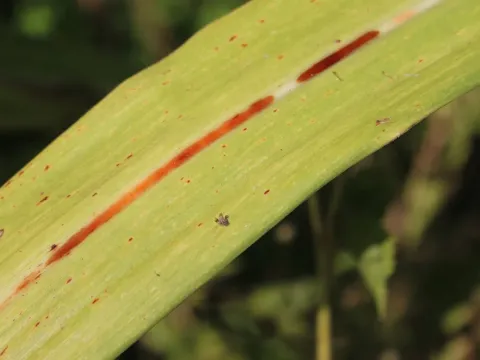
Red rot of sugarcane
Colletotrichum falcatum
Red rot of sugarcane is caused by the fungal pathogen Colletotrichum falcatum (teleomorph Glomerella tucumanensis). This fungus is a member of the Ascomycota and is considered one of the most destructive diseases affecting sugarcane crops worldwide.
What the section contains
Red rot of sugarcane
The pathogen primarily colonizes the vascular tissues and internal parenchyma of the stalk. It produces a dense mycelium and specialized reproductive structures known as acervuli, which rupture the epidermis to release conidia into the environment.
The fungus is highly variable and consists of numerous physiological races. This biological diversity allows it to adapt to different sugarcane cultivars, often leading to the breakdown of resistance in previously tolerant plant varieties.
Survival occurs through chlamydospores and mycelium within infected stalks, soil debris, and seed sets. It is primarily disseminated by wind-blown spores, rain splashes, and the movement of infected plant material during planting.
Optimal environmental conditions for the fungus include high relative humidity, frequent rainfall, and warm temperatures. These conditions favor both the growth of the pathogen and the efficient dispersal of its spores across the plantation.
The primary economic impact of red rot is the significant reduction in sucrose content. The fungus secretes invertase, an enzyme that converts sucrose into glucose and fructose, which are then consumed by the fungus, rendering the stalks useless for sugar extraction.
Severe infections lead to systemic wilting and the death of the entire stalk. This results in reduced stand density and lower total biomass yield, directly affecting the profitability of sugar factories and farming operations.
The disease also compromises the quality of the planting material. Using infected sets (cuttings) leads to poor germination, weak seedlings, and the rapid spread of the disease within newly established plots.
Stalks affected by the disease are susceptible to lodging, which complicates mechanical harvesting and often leads to additional losses during the collection process in the field.
In addition to yield loss, growers often face increased input costs for chemical control, land management changes, and the premature replacement of elite but susceptible sugarcane varieties.
Internally, the stalk exhibits characteristic reddening of the pith. When cut longitudinally, these red areas appear as alternating patches of white and red tissues, which is a classic diagnostic symptom of red rot.
As the infection advances, the internal tissues darken to a deep brown or black color, and the stalk may develop an acidic or fermented odor due to the decomposition of sugars and secondary microbial activity.
External symptoms include the yellowing and wilting of leaves, typically starting from the tips and progressing downward. The crown of the plant eventually dries up, and the growth of the stalk is completely arrested.
Under humid conditions, small black acervuli may appear on the surface of the nodes and stalks. These structures contain the fungal spores, which serve as a secondary inoculum for spreading the disease to healthy plants.
- Reddening of the internal stalk pith with white transverse bands.
- Acidic or alcoholic smell when the stalk is split open.
- Progressive wilting and drying of the foliage.
- Formation of small, black, dot-like acervuli on the stalk surface.
The most reliable control measure is the cultivation of resistant or tolerant sugarcane varieties. Breeding programs continuously work to incorporate resistance genes into high-yielding commercial varieties.
Selection of disease-free planting material is crucial. Hot water treatment (HWT) of seed sets is a proven method to kill internal infections and ensure that the new crop starts from a healthy base.
Good agricultural management is essential for disease suppression. This includes maintaining proper soil drainage to avoid waterlogging and implementing balanced fertilization to ensure plant vigor.
Management of stem-boring insects is vital because their feeding tunnels provide entry points for fungal spores. Controlling these pests significantly reduces the incidence and severity of the disease.
Crop rotation and strict sanitation practices, such as removing and destroying severely infected clumps, help in reducing the primary inoculum levels in the soil and surrounding fields.