
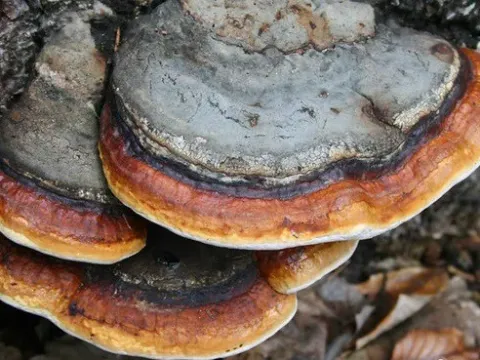
Red-belted conk
Fomitopsis pinicola
Fomitopsis pinicola, commonly known as the red-belted conk, is a perennial polypore fungus in the Fomitopsidaceae family. It is one of the most common and destructive wood-decay fungi found in Northern Hemisphere forests.
What the section contains
Red-belted conk
The fruiting body is typically hoof-shaped or shelf-like. It is characterized by a smooth, shiny crust that ranges from brown to reddish-black, with a distinctive light-colored (often reddish-orange) margin.
The interior flesh is tough, woody, and pale yellowish-brown. The underside consists of a cream-colored pore surface that may darken with age or bruising.
As a basidiomycete, it reproduces by releasing millions of spores from the pore surface, which are dispersed primarily by wind to colonize new substrates.
This species is highly efficient at degrading lignin and cellulose, which makes it a major ecological factor in nutrient cycling, but also a serious pathogen for living timber.
The fungus affects a broad range of coniferous and deciduous tree species, including spruce, pine, birch, and aspen. It primarily causes brown cubical rot in the heartwood.
The infection leads to the structural degradation of the wood, causing it to become brittle and crumble into small cubes. This process significantly reduces the economic value of the lumber.
In forest ecosystems, it contributes to tree mortality, especially in stands that have been stressed by drought, wind damage, or previous insect infestations.
In residential areas, the presence of these conks indicates that the structural integrity of the tree is compromised, posing a significant risk of branch or trunk failure.
The fungus spreads via mycelial expansion within the wood and through air-borne spores that enter through bark wounds or broken branches.
The fruiting bodies are perennial, meaning they persist on the tree trunk throughout the entire year, slowly expanding their size over multiple growing seasons.
Spore release is most active during the warmer, moist months of spring, summer, and autumn, which provides optimal conditions for the fungus to reproduce.
Mycelial growth within the host tree continues throughout the year, provided temperatures remain above freezing, making the fungus an persistent threat.
Activity levels often increase following extreme weather events, such as windstorms, which create new wounds on tree trunks for the pathogen to exploit.
While visible conks are present year-round, the most rapid colonization of new hosts usually occurs during the peak humidity of the spring and early summer months.
The most reliable sign of infection is the presence of the woody, shelf-like conks on the bark, particularly around old wounds, knotholes, or near the base of the trunk.
Internally, the wood exhibits a characteristic brown, crumbly appearance with distinct cracks, often filled with white mycelial mats or strings.
The host tree may show signs of decline, such as canopy thinning, crown dieback, or the premature loss of leaves or needles as the heartwood rot progresses.
Advanced infections can cause hollow sounds when the tree trunk is tapped, indicating significant internal decay and loss of structural wood density.
In some cases, moisture or dark liquid can be seen weeping from cracks in the bark, a sign that the fungus is actively metabolizing the wood.
Effective management focuses on sanitation, including the removal of dead or heavily infected trees to reduce the inoculum load in the forest or garden.
Preventative measures should include protecting tree trunks from mechanical damage during landscaping or logging activities to prevent initial infection sites.
Pruning should be done carefully, and all major wounds should be sealed or treated to prevent fungal spores from settling on exposed wood.
- Conduct annual inspections of tree health.
- Remove and dispose of diseased timber and fruiting bodies.
- Promote tree vigor through proper watering and soil management.
- Apply antifungal treatments to wounds on high-value specimen trees.
Chemical control is rarely effective once the fungus has established itself deep within the heartwood, so early detection and physical removal remain the most critical tactics.