
Red leaf blotch of grape
Pseudopeziza tracheiphila
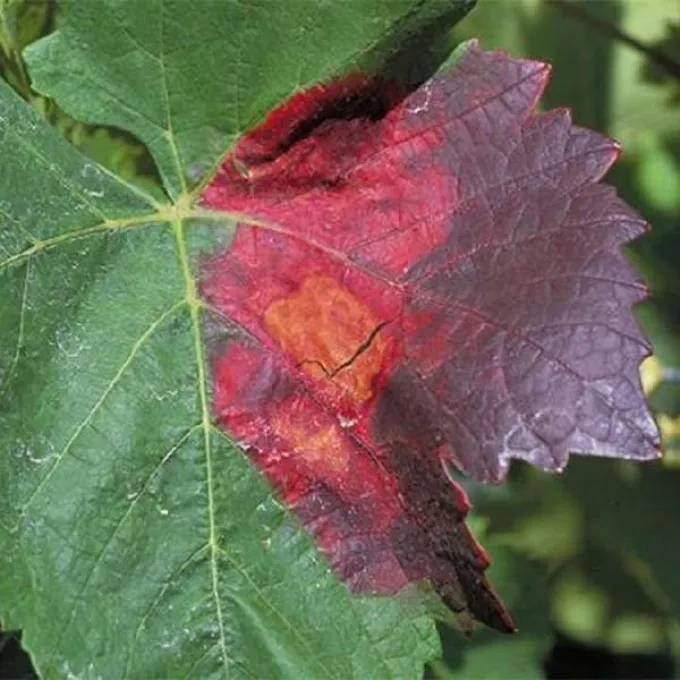
Description
How to identify
The causal agent is Pseudopeziza tracheiphila, an ascomycete fungus. This pathogen specifically targets the vascular tissue of the grapevine, causing a systemic-like response within the leaf blades.
The fungus acts as an obligate parasite, thriving within the xylem vessels. This specific localization prevents water transport, leading to the rapid necrosis that characterizes the disease known as "red leaf blotch" or "brenner" in German.
The biology of this fungus is centered around the production of apothecia on overwintering leaves. These structures release ascospores during spring rains, which are the primary inoculum for the new season.
Unlike many other leaf spot diseases, this pathogen is highly specialized for grapevine hosts. It does not infect other plants, which allows for targeted management strategies within the vineyard ecosystem.
Microscopic identification reveals the presence of hyphae clogging the vascular system. However, in field conditions, the diagnosis is primarily based on the distinct progression of necrotic leaf symptoms.
What it damages
The pathogen causes premature senescence of the foliage. When a vine loses its leaves mid-season, the photosynthetic capacity is drastically reduced, affecting the entire vine's physiology.
Sugar accumulation in the berries is significantly hindered. Fruits remain sour and lack the necessary maturity for quality wine production or fresh consumption.
The vines become weaker, as they cannot produce sufficient carbohydrates for winter storage. This leaves the plants vulnerable to winter injury and potential dieback of canes.
Yield losses can be catastrophic in severe outbreak years, especially when the disease is not managed correctly. Repeated infections year after year can eventually kill the vine.
Economic damage includes not just the loss of fruit but also the increased cost of fungicide applications and the potential need for vine replacement in heavily infected blocks.
When it appears
Infection begins in early spring when temperatures reach the 10°C to 12°C range. Rain events trigger the release of ascospores from the dead leaves on the vineyard floor.
The primary infection period is usually late spring, from May through June. Prolonged wet weather during this time is critical for the success of the pathogen's life cycle.
High temperatures and dry conditions during summer effectively halt the active spread of the disease. The fungus does not thrive under hot, arid climates common in Mediterranean-type summers.
Secondary infections may occur if late-season rain creates favorable conditions. However, the most severe damage is usually inflicted early in the season.
The cycle concludes with the fungus settling into the fallen leaves, preparing to survive the winter. This persistence makes sanitation efforts essential for the next season's success.
Signs of infestation
Initial symptoms are small yellow (on white varieties) or red (on red varieties) lesions between the leaf veins. These spots are often angular, limited by the leaf's vascular network.
As the disease progresses, the areas between the veins turn necrotic. The tissue adjacent to the main veins often remains green for a longer period, creating a distinct color contrast.
Affected leaves curl and become brittle as they dry out. The entire leaf surface may eventually turn brown, making the foliage appear as if it has been scorched by fire.
Premature abscission is a hallmark sign. You may see healthy-looking shoots that have lost most of their lower leaves by mid-summer, leaving the canopy severely thinned.
- Development of necrotic red or yellow spots.
- Distinct mosaic patterns between veins.
- Leaves becoming brittle and rolling upwards.
- Early leaf drop leading to defoliated vines.
Control measures
Cultural control is the most important component of management. Removing and destroying fallen leaves during the dormant season is critical to reduce the initial spore count.
Deep cultivation of the soil can bury the infected leaf litter, preventing the formation and release of ascospores. This simple step is highly effective in reducing disease pressure.
Fungicide sprays are recommended as a preventive measure, especially in high-risk areas during early spring. Copper-based products have traditionally been used to protect the new growth.
Maintaining an open canopy through proper pruning and canopy management helps keep the foliage dry. Improved air circulation reduces the time leaves stay wet after rain.
Regular scouting of the vineyard during May and June allows for early detection. If small pockets are found, immediate treatment can prevent a large-scale epidemic in the block.
Causes diseases · 1
Discussion
No discussions yet — be the first.