
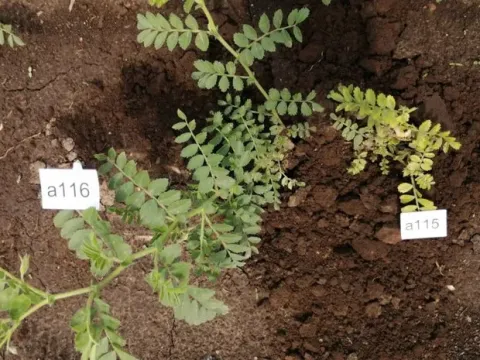
Chickpea stunt virus
Chickpea stunt
Chickpea stunt virus (CpSV) is a plant pathogenic virus classified within the genus Polerovirus, family Solemoviridae. It specifically targets chickpea crops, leading to significant physiological disruption.
What the section contains
Chickpea stunt virus
The virus is transmitted in a persistent, circulative, non-propagative manner by several aphid species, most notably the pea aphid (Acyrthosiphon pisum).
Once introduced into the plant, the virus moves through the phloem, systemically infecting the plant and impairing the normal transport of nutrients from leaves to other plant organs.
Field identification is often based on typical stunted growth symptoms, but laboratory confirmation through ELISA or RT-PCR is required to distinguish it from other soil-borne or viral pathogens.
The virus relies on alternative host plants, including various wild legumes, to persist in the environment when chickpea crops are not actively growing.
##damage##Chickpea stunt virus primarily affects chickpea (Cicer arietinum). It is considered a major limiting factor for production in several regions across the world.
Infection leads to severe stunting, drastically reducing biomass and the ability of the plant to produce pods. High infection rates can result in total crop failure in affected patches.
Plants infected early in the season often show little to no pod development. The yield losses in affected fields can range from minor spots to nearly the entire production of the field.
Seed quality is severely compromised; seeds harvested from stunted plants are often shriveled, smaller in size, and exhibit poor germination rates.
The economic impact of the virus is compounded by the loss of investment in fertilizers, water, and labor, as infected plants do not reach their yield potential.
The spread of the virus is closely tied to the movement of aphid populations. Major infection waves usually occur during the aphids' peak migration periods.
Warm and favorable weather conditions accelerate the reproduction of the aphid vector, leading to higher levels of virus transmission within the chickpea crop.
In many regions, the infection is most severe when early spring weather allows for early colonization of the crops by winged aphids carrying the virus.
The virus survives the off-season in perennial weeds or winter legume crops, which serve as an initial source of infection when aphid vectors move to new plantings.
Stress conditions, such as drought, often exacerbate the appearance and progression of symptoms, making infected plants more susceptible to overall decay.
A classic symptom of the virus is severe stunting of the plant, characterized by shortened internodes and a bushy, compact appearance compared to healthy plants.
Leaves of infected plants may exhibit chlorosis, reddening, or bronzing, and often appear thicker and more brittle than normal, healthy leaf tissue.
Flower initiation is often delayed or completely aborted, and if pods are produced, they are typically undersized and contain few or no developed seeds.
Root system development is often restricted, which makes the plant less efficient in water uptake and more prone to wilting under heat or drought stress.
Due to the phloem-restricted nature of the virus, plants often show a gradual decline in vigor as the season progresses, leading to uneven crop stands.
Effective management begins with controlling the aphid vectors. Application of systemic insecticides early in the season can significantly reduce the rate of virus spread.
Implementing spatial isolation between chickpea fields and known perennial legume reservoirs is a crucial strategy to lower the initial infection pressure.
The development and use of resistant or tolerant chickpea cultivars are currently the most sustainable and efficient long-term approaches to managing the virus.
Cultural practices, including weed management around fields, help eliminate the virus-carrying reservoir plants, thereby decreasing the aphid vector population.
Optimal planting dates can sometimes help crops avoid the peak periods of aphid migration, reducing the probability of early-stage plant infection.