
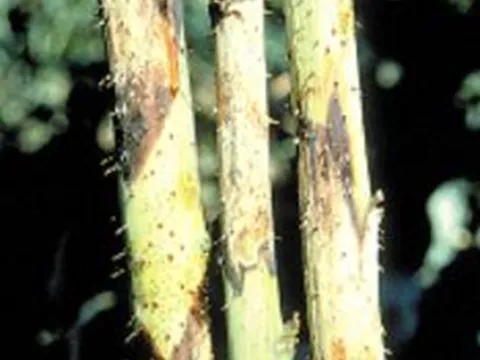
Cercospora leaf spot of blackberry
Cercosporella rubi
Cercospora leaf spot of blackberry is a fungal disease caused by the pathogen Cercosporella rubi. This fungus is classified within the Ascomycota division and is a common threat to various Rubus species, including cultivated blackberries.
What the section contains
Cercospora leaf spot of blackberry
The life cycle of the pathogen is centered on its ability to produce conidia, which are asexual spores that spread via wind and water splashing. These spores serve as the primary inoculum for new infections during the growing season.
The fungus overwinters in dead leaf tissue and diseased cane debris remaining on the soil surface or attached to the plant. As temperatures rise in the spring, the fungus reactivates and begins to produce new spores.
Infection occurs when moisture is present on the leaves for an extended period, allowing the spores to germinate and penetrate the leaf epidermis through stomata or wounds.
Laboratory diagnosis involves examining tissue samples under a microscope to identify the characteristic multicellular, spindle-shaped conidia of Cercosporella rubi, which distinguishes it from other fungal leaf spots.
The primary damage caused by this pathogen is the reduction of the plant's photosynthetic capacity. When the leaves become heavily spotted and necrotic, the plant cannot produce sufficient energy for growth and fruit development.
Severe infestations lead to premature defoliation, which stresses the blackberry plant. This lack of foliage during the late summer prevents the plant from storing enough carbohydrates for winter survival.
Plants affected by Cercospora leaf spot are significantly more susceptible to winter injury and cold damage. Weakened canes often fail to survive sub-zero temperatures, leading to reduced spring growth.
Fruit yield is impacted both in quantity and quality. Berries on infected bushes are often smaller, lack proper sugar content, and may be unmarketable due to their poor appearance and reduced shelf life.
In cases of chronic, untreated infections, the overall vigor of the blackberry patch declines over several years, eventually leading to the death of the canes and the need for complete plantation replacement.
Initial symptoms of the disease appear as small, circular or angular spots on the foliage. These spots are typically light brown in color, surrounded by a distinct darker purple or brown margin.
As the infection progresses, the centers of the spots turn grayish-white or nearly white, which is the most reliable diagnostic feature for identifying Cercosporella rubi in the field.
A thin, grayish-white fungal layer may develop on the underside of the leaf within the spotted areas. This layer is composed of masses of fungal spores that can easily spread to healthy tissue.
On canes, the disease manifests as elongated, sunken lesions that can interfere with the transport of nutrients. These lesions may become necrotic and contribute to the dieback of affected canes.
During periods of high humidity and rainfall, the spots may merge, causing large sections of the leaf to dry out and fall off, resulting in the characteristic ragged appearance of the canopy.
The most effective management strategy is sanitation. Growers should remove and destroy all infected plant debris, including fallen leaves and pruned canes, to eliminate the primary sources of overwintering inoculum.
Improving air circulation within the canopy is essential. Pruning and thinning out crowded canes help the foliage dry faster after rain or dew, which significantly inhibits the germination of fungal spores.
Fungicidal applications are necessary in areas with high disease pressure. Applying protective fungicides early in the season can prevent the initial infection, while systemic products can manage the disease during outbreaks.
It is important to rotate different classes of fungicides to prevent the pathogen from developing resistance. Always follow local agricultural guidelines regarding specific chemical use on berry crops.
- Select blackberry cultivars known for better disease resistance.
- Avoid overhead irrigation to minimize the duration of leaf wetness.
- Maintain balanced soil fertility to avoid excessive, succulent growth that is more prone to infection.