
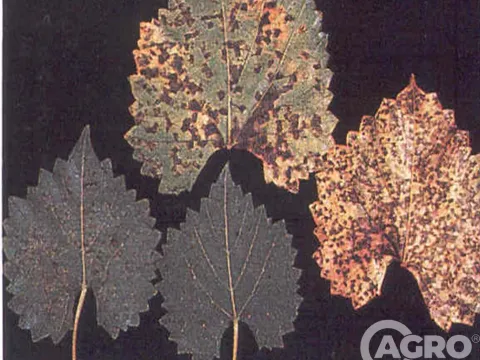
Cercospora leaf spot
Cercospora brachypus
Cercospora brachypus is a fungal plant pathogen within the genus Cercospora. It is responsible for various leaf spot diseases that significantly impact plant vitality in multiple agricultural settings.
What the section contains
Cercospora leaf spot
The fungus propagates primarily through conidia, which are asexual spores produced on conidiophores. These structures often emerge through plant stomata, creating a visible fuzzy appearance on infected areas.
Taxonomically, it belongs to the Ascomycota phylum. Its ability to persist in diverse environmental conditions makes it a widespread and resilient pathogen in modern agriculture.
Microscopic analysis of the conidia is essential for identification. The spores are typically elongated, septate, and clear to light-brown in color, which helps distinguish them from other fungal pathogens.
Understanding its biology is crucial for farmers, as the pathogen's mycelium can overwinter in soil debris, acting as a persistent source of infection for successive growing seasons.
The disease primarily targets the foliage of crops, causing severe chlorosis and necrosis. The loss of photosynthetic capacity leads to stunted growth and reduced yields.
By consuming plant nutrients and damaging leaf tissues, the fungus weakens the plant's structural integrity, leading to premature leaf drop and increased susceptibility to other pathogens.
In fruit-bearing crops, the infection can spread to reproductive parts, resulting in poor fruit set and reduced quality of harvested produce.
If left unmanaged, the rapid spread of the fungus can cause significant economic losses, sometimes destroying over half of a field's potential harvest in favorable conditions.
Furthermore, weakened plants are more susceptible to secondary stressors, such as drought or insect infestation, creating a compounding negative effect on field productivity.
The disease typically emerges during the growing season when temperatures are warm, generally ranging between 20°C and 30°C. High humidity is a critical factor for successful spore germination.
Rainy weather and overhead irrigation provide the water films required for the conidia to infect plant tissues. Consequently, symptoms often appear after periods of heavy rainfall.
Dense canopies restrict airflow, which creates a humid microclimate. This environment is highly conducive to the spread of the fungus, allowing it to move rapidly through a field.
The pathogen can undergo multiple cycles of sporulation and infection within a single growing season, rapidly increasing the disease incidence throughout the crop.
As the season ends, the fungus shifts into a dormant phase. It remains on fallen leaves or in the soil, awaiting the appropriate temperatures to restart its cycle in the following spring.
The first symptoms are small, faint spots on the leaves. As the infection progresses, these spots enlarge and change color, typically becoming brown or gray with distinct borders.
A yellow halo often surrounds the necrotic spot, indicating the plant's stressed response to the fungal toxins being released by the pathogen.
In humid conditions, a characteristic gray or olive-colored fungal growth appears in the center of the spots on the underside of the leaves, consisting of masses of spores.
Severe infestations cause individual spots to merge, resulting in large, dead patches. This frequently leads to the entire leaf turning yellow and shriveling up.
Stems and petioles may also show elongated dark lesions, which can eventually girdle the tissue and cause distal parts of the plant to wither.
Sanitation is a primary control strategy. Removing or burying infected plant residues helps reduce the primary inoculum source for the next season.
Crop rotation is essential. By planting non-host crops for several years, farmers can starve the pathogen and significantly reduce its population in the soil.
Fungicide applications are highly effective when applied preventively or at the very first signs of infection. Systemic fungicides are often preferred for long-lasting protection.
Managing canopy density through proper spacing and pruning improves airflow, which helps keep leaves dry and limits the fungus's ability to germinate.
Choosing resistant or tolerant crop varieties is the most sustainable approach, providing a baseline of protection that reduces the reliance on chemical inputs.