
Ceratostomella fimbriata
Ceratostomella fimbriata
Description
How to identify
Ceratostomella fimbriata, often classified as Ceratocystis fimbriata, is an ascomycete fungus known to be a significant plant pathogen across various regions.
The organism produces characteristic perithecia with long necks, which release ascospores that act as primary inoculum for spreading the disease.
In addition to sexual reproduction, the fungus develops endoconidia and robust chlamydospores, which allow it to survive in the soil for extended periods even in the absence of a host.
The pathogen is highly efficient at invading host tissues through mechanical wounds, such as those caused by insects, tools, or harvesting equipment.
It occupies a specialized ecological niche as a necrotrophic parasite, causing tissue breakdown and death in its host plants.
What it damages
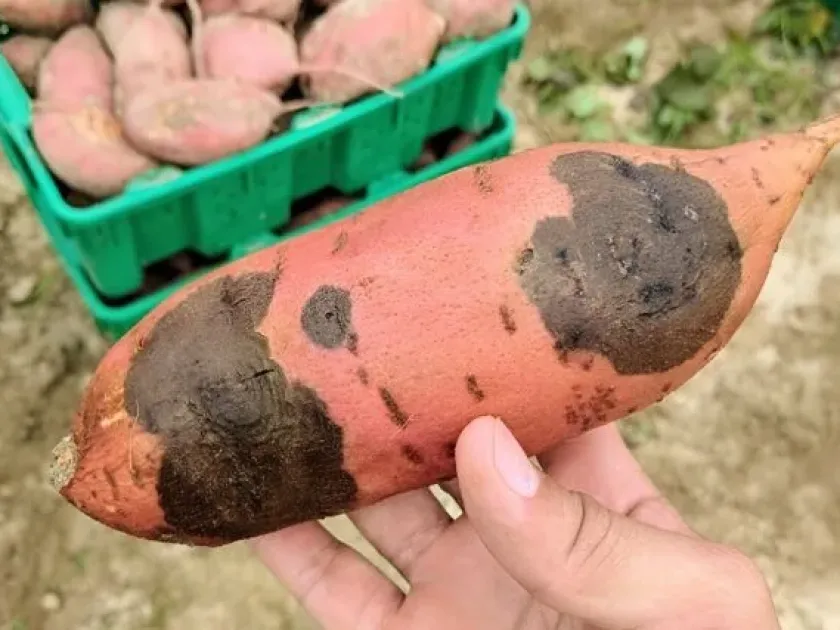
The pathogen is most notoriously associated with black rot of sweet potato (Ipomoea batatas), causing severe losses in both yield and quality.
Beyond sweet potatoes, various host-specific strains of the fungus affect diverse plants, including cocoa, coffee, and several species of tropical fruit trees.
The disease causes significant economic impacts by rendering harvested crops unmarketable due to the presence of black, sunken lesions and associated bitterness.
In the field, it can cause damping-off of seedlings, while in storage, it can destroy entire shipments if environmental conditions favor fungal growth.
The accumulation of toxins within infected tissues makes the affected produce dangerous for consumption and unsuitable for animal feed.
Signs of infestation
Early symptoms include small, dark, circular, or irregular lesions appearing on the surface of roots or tubers that gradually darken to black.
Internal tissues exhibit a dry, firm black rot that extends deeper into the fleshy part of the storage organ, creating a clear boundary between healthy and diseased cells.
Under humid conditions, the surface of the lesions may develop a fuzzy, olivaceous-grey fungal growth, which is a collection of spores ready to be dispersed.
On seedlings, the infection results in stunted growth, yellowing leaves, and blackening of the stem base, often leading to total plant collapse.
Storage-related symptoms involve the rapid spread of infection to adjacent healthy roots, often leading to pockets of decay within stored batches.
Control measures
Effective management begins with the use of disease-free, certified seed stock and the selection of resistant sweet potato varieties.
Crop rotation practices should be strictly observed, avoiding susceptible crops in the same field for at least three to four years to break the infection cycle.
Sanitation is paramount; all storage facilities, containers, and tools must be thoroughly disinfected to eliminate residual inoculum.
Post-harvest handling should include proper curing and storage at optimal temperatures and humidity levels to discourage the development of the pathogen.
Immediate removal and destruction of any infected tubers during the sorting process are critical to prevent the outbreak of black rot during long-term storage.
Causes diseases · 1
Discussion
No discussions yet — be the first.