
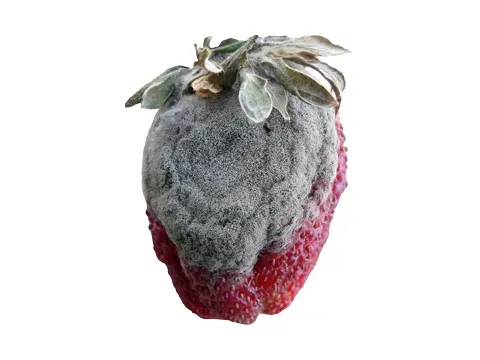
Grey mold
Botryotinia fuckeliana
Grey mold is caused by the necrotrophic fungus Botryotinia fuckeliana (anamorph Botrytis cinerea). It is classified as an ascomycete and acts as one of the most destructive and widespread pathogens in global agriculture.
What the section contains
Grey mold
The fungus survives harsh conditions by producing sclerotia, which are hard, black resting bodies. These structures remain dormant in the soil or crop debris until favorable environmental conditions initiate the production of spores.
Dissemination primarily occurs via wind-borne conidia and splashing rain. The pathogen thrives in high-humidity environments and temperatures that favor rapid tissue degradation, typically ranging between 15°C and 25°C.
It employs a combination of enzymes and toxins to penetrate plant cell walls, causing rapid maceration of plant tissues. Its ability to switch between parasitic and saprophytic lifestyles ensures its long-term survival in various environments.
Economic losses are severe, affecting not only field crops but also post-harvest produce during storage and transportation, where the fungus spreads rapidly from infected to healthy fruit in confined spaces.
The pathogen has a vast host range, including strawberries, grapes, tomatoes, lettuce, ornamental flowers, and legumes. Almost any succulent plant part can be targeted, leading to significant yield loss.
Grey mold epidemics typically appear during periods of high humidity and rainfall, particularly during the late growing season when the plant tissue is mature and dense canopy prevents airflow.
The most distinctive sign is the development of a grey, fuzzy mass of spores covering infected parts. The underlying tissue becomes watery, soft, and necrotic, often leading to total collapse of the stems or decay of fruit.
Integrated management involves removing infected debris, ensuring adequate plant spacing to facilitate airflow, and controlled irrigation. Fungicide applications using effective chemical classes must be timed according to growth stages to manage resistance.