
Groundnut ringspot virus
Groundnut ringspot
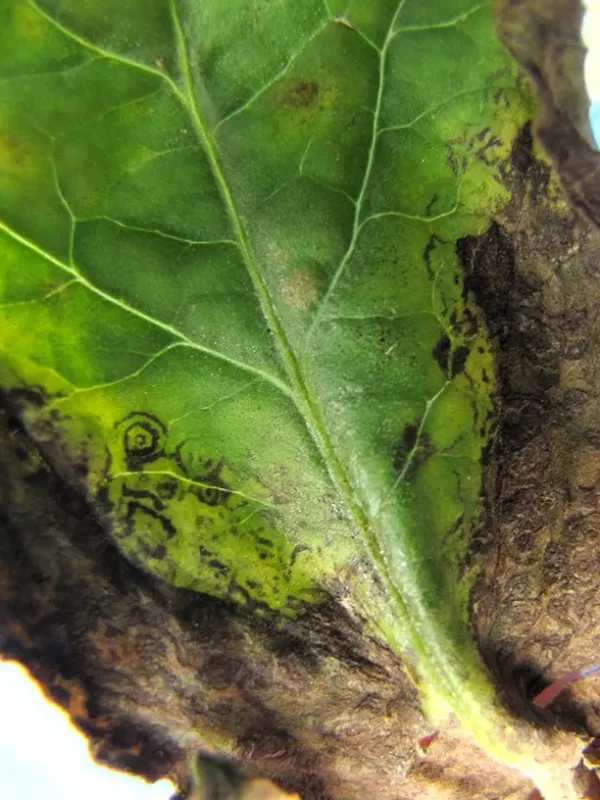
Description
How to identify
Groundnut ringspot virus (GRSV) is a plant-pathogenic virus belonging to the genus Orthotospovirus within the Tospoviridae family. It is an RNA virus that causes significant economic impact globally.
The virus is transmitted by thrips, most notably the western flower thrips (Frankliniella occidentalis). The insect acquires the virus during the larval stage and remains an effective vector for its entire life span.
Once introduced into the plant tissue, the virus replicates and spreads systemically via the phloem, affecting the overall physiological functions of the host plant.
Epidemiological spread is heavily influenced by the population density of the vector and the proximity of alternative host plants, including common field weeds.
Understanding the biology of GRSV is critical because there is no cure for an infected plant, making prevention the only viable management strategy.
What it damages
The virus has a wide host range, primarily affecting peanuts (groundnuts), tomatoes, peppers, and various ornamental species. It causes severe developmental issues in host crops.
Infection results in substantial yield reduction and poor crop quality, often making the harvest unsuitable for commercial sale due to visible blemishes.
Early-stage infection leads to stunted growth, which prevents the crop from reaching its full potential and leads to uneven maturity across the field.
Fruit and pod production are significantly impacted, often manifesting as necrotic lesions, distorted shapes, and general loss of vitality in the plant.
The cumulative damage often forces farmers to discard entire sections of the crop, leading to financial losses and increased management expenditures.
Signs of infestation
Symptoms typically include chlorotic or necrotic ringspots on leaves, which is the defining characteristic of the viral infection.
Plants often exhibit mosaic patterns, leaf curling, and severe deformation of the foliage, giving the plant a stunted or twisted appearance.
Stems may show necrotic streaks or dieback as the virus disrupts the vascular tissue, leading to wilting of individual branches or the entire plant.
Fruits may develop mottled patterns or structural abnormalities, which significantly decrease their market value and shelf life.
- Chlorotic ringspots on foliage
- Mosaic patterns on leaves
- Leaf curling and distortion
- Stunted plant growth
- Necrotic streaks on stems
Control measures
Management focuses on vector control. Applying systemic insecticides to suppress thrips populations is essential to reduce the transmission rate.
Sanitation practices, including the removal and destruction of infected plants and surrounding weed hosts, help minimize the inoculum source.
Utilizing resistant or tolerant crop varieties, where available, remains one of the most sustainable approaches for mitigating GRSV impacts.
In greenhouse settings, physical barriers like fine-mesh screens are highly effective at excluding thrips and preventing the virus from entering the facility.
Maintaining a rigorous crop rotation program involving non-host species disrupts the life cycle of the vectors and prevents the buildup of the virus in the field.
Causes diseases · 1
Discussion
No discussions yet — be the first.