
Grey mold of grapes
Grapevine berry
Description
How to identify
Grey mold is caused by the fungus Botrytis cinerea, a versatile necrotrophic pathogen belonging to the Ascomycota phylum. It is globally recognized as the primary cause of fruit rot in commercial viticulture.
The pathogen persists in the environment as sclerotia or mycelium within dead plant tissues, leaf litter, and vineyard soil. It initiates infection during spring, triggered by moderate temperatures and high humidity.
Botrytis cinerea exhibits a complex life cycle, utilizing wind-borne conidia to spread throughout the vineyard. It is highly opportunistic, typically invading tissues through pre-existing wounds or natural openings in the berry skin.
Development is heavily favored by cool, wet weather, particularly during the veraison stage. The physiological changes in the grape berry, specifically the increase in sugars, make it a highly susceptible host for the pathogen.
The fungus is capable of infecting all green parts of the vine, but its most severe economic impact occurs on the bunches. The ability to form sclerotia allows it to survive extreme environmental conditions, ensuring recurrence each season.
What it damages
The primary damage occurs on the grape bunches. The infection manifests as rapid berry decay, where the fungus secretes enzymes that break down cell walls, resulting in a pulpy, grey-covered mass.
In addition to the fruit, the pathogen causes stem rot. By colonizing the rachis, it disrupts the flow of nutrients and water to the berries, leading to bunch shriveling and significant reduction in yield.
Early season infections can impact floral parts, causing blossoms to rot and fail to set fruit. This early loss reduces the overall bunch density and impacts the total tonnage of the harvest.
The fungus can also infect shoots and leaves, leaving behind necrotic lesions. While these lesions are often minor, they serve as localized sources of inoculum that increase the pressure for late-season berry infection.
Post-harvest loss is another major concern. Botrytis infection in table grapes during transit or storage can quickly spoil entire crates, while its presence in wine grapes results in "off" flavors and diminished sensory quality.
Signs of infestation
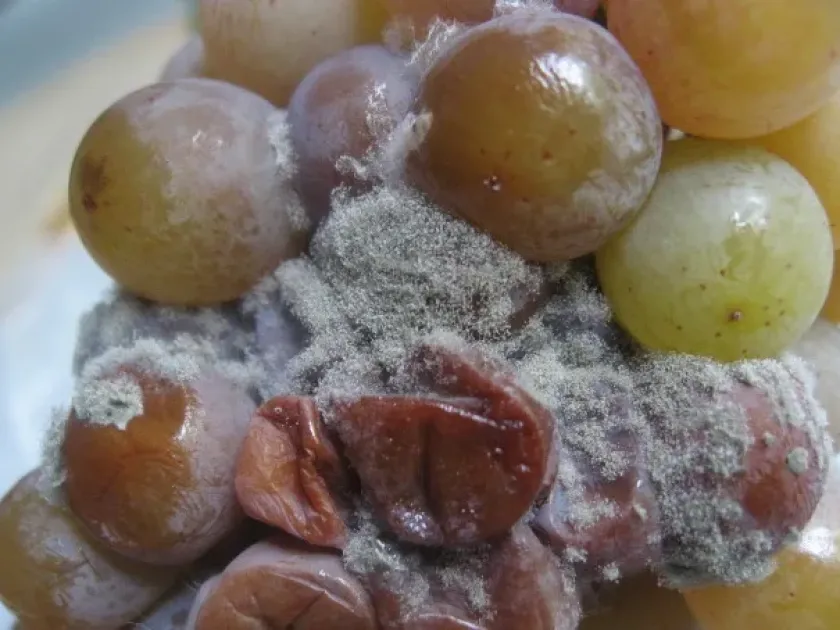
The most distinctive symptom is the development of a dense, greyish-white fungal mat (conidia) covering the surface of infected berries. This "mold" is often the first visual indicator of a widespread infection.
Infected berries typically lose their natural color and become soft and shriveled. When squeezed, they release a cloudy liquid containing numerous spores and fungal mycelium.
Under persistent humidity, the infection spreads from berry to berry until the entire bunch is transformed into a cluster of decaying fruit. The rachis often shows dark, depressed lesions that eventually become covered in spores.
Sclerotia, which appear as hard, black, irregular structures, develop on the surface of mummified berries or stems. These are survival structures that indicate the disease has progressed to a dormant stage.
Foliar symptoms include irregular, brownish spots with hazy borders, primarily during damp spring or autumn weather. These spots may be confused with other leaf-spotting diseases, but the presence of microscopic grey sporulation confirms Botrytis.
Control measures
Cultural practices are paramount: vineyard management should focus on improving canopy airflow through leaf thinning, suckering, and proper trellis training to reduce the micro-humidity within the bunch zone.
Effective pest management is essential, especially controlling grape berry moths. The entry points created by these larvae significantly increase the risk of fungal establishment and subsequent rot.
Chemical control strategies involve applying specialized fungicides at critical vine growth stages: post-bloom, bunch closure, and the onset of veraison. Always ensure adherence to the pre-harvest interval (PHI).
Nutrient management should be balanced; excessive nitrogen levels lead to overly dense canopies and tender skin tissues, which are significantly more prone to fungal attack than properly ripened fruit.
- Utilize resistant or loosely-bunched grape varieties.
- Implement rigorous sanitation by removing infected clusters.
- Monitor weather patterns to anticipate high-risk infection windows.
- Incorporate biological control agents like Bacillus subtilis during the ripening phase.
Causes diseases · 1
Discussion
No discussions yet — be the first.