
Athelia rolfsii
Athelia rolfsii
Description
How to identify
Athelia rolfsii is a soil-borne fungus belonging to the Kingdom Fungi, Phylum Basidiomycota, and the genus Athelia. It was historically known as Sclerotium rolfsii.
The fungus is characterized by its inability to produce conidia, relying instead on mycelial growth and the formation of durable sclerotia for survival and spread.
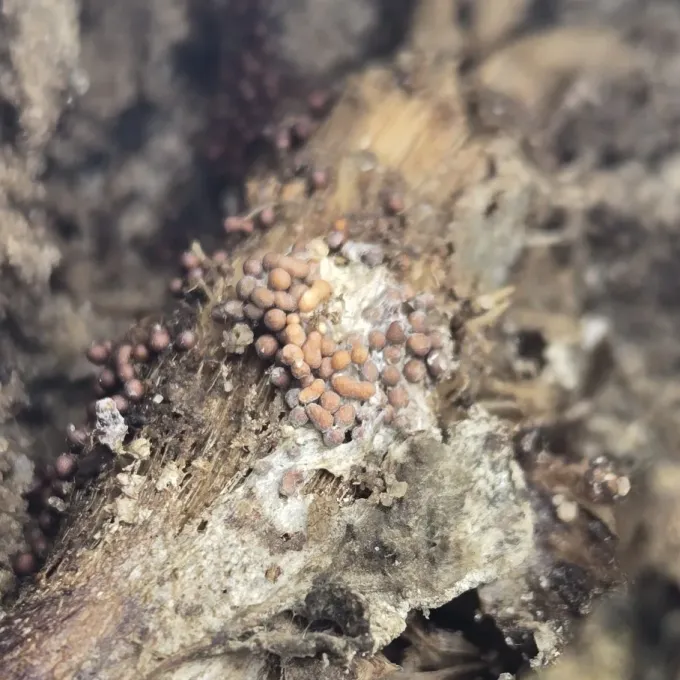
The sclerotia are spherical, smooth, and resemble mustard or cabbage seeds. They are initially white, turning tan to dark brown as they mature.
This pathogen is highly polyphagous, meaning it has an extremely broad host range, infecting hundreds of species of cultivated crops and weeds worldwide.
It thrives in warm climates and is often considered a major limiting factor for vegetable and legume production in tropical and subtropical regions.
What it damages
Common hosts include major economic crops such as tomatoes, peppers, potatoes, beans, peanuts, and various ornamental bulb plants.
The fungus attacks the crown and roots, causing rapid wilting and collapse of the plant due to the destruction of the vascular system.
It is particularly destructive in high-density plantings or greenhouses where warm temperatures and high humidity are constantly maintained.
In addition to field crops, it causes post-harvest rot if infected materials are harvested and stored under favorable conditions for fungal growth.
Total crop loss can occur within a few days once the infection reaches the stem base, leading to complete wilting of the canopy.
When it appears
The fungus is most active during periods of high temperature, with optimal growth occurring between 27°C and 32°C (80°F–90°F).
High moisture levels in the soil or air are critical for the activation and rapid growth of the mycelium during the summer months.
Spread is facilitated by moving water, infested soil, and agricultural tools that carry mycelium or sclerotia from one part of the field to another.
The pathogen remains dormant in the soil as sclerotia during unfavorable conditions, being able to survive for several years without a host.
The life cycle is completed when these dormant sclerotia germinate in response to root exudates from nearby susceptible plants.
Signs of infestation
The earliest symptom is the sudden wilting of the lower leaves, which usually progresses rapidly to the entire plant despite adequate soil moisture.
A distinct white, fan-like mat of mycelium is often visible around the base of the stem at the soil line, especially during wet or humid weather.
Small, round, mustard-seed-sized sclerotia will develop within the mycelial mat, providing a clear indication of the presence of the pathogen.
Stem tissues at the soil line become brown, soft, and necrotic, resulting in the stem snapping or collapsing easily under stress.
Root systems may appear decayed and discolored, and in severe cases, the entire underground portion of the plant is completely destroyed.
Control measures
Crop rotation with non-host species, such as corn or small grains, is highly recommended to reduce the population of sclerotia in the soil.
Improving soil drainage and avoiding excessive overhead irrigation helps prevent the buildup of moisture required for fungal colonization.
Deep plowing can bury infested plant debris, placing sclerotia deeper in the soil profile where they are less likely to infect new seedlings.
Biological control using antagonistic fungi like Trichoderma spp. has proven effective in suppressing Athelia rolfsii in organic and conventional systems.
While chemical fungicides are available, their success depends heavily on proper placement in the soil, which remains a significant practical challenge.
Causes diseases · 6
Discussion
No discussions yet — be the first.