
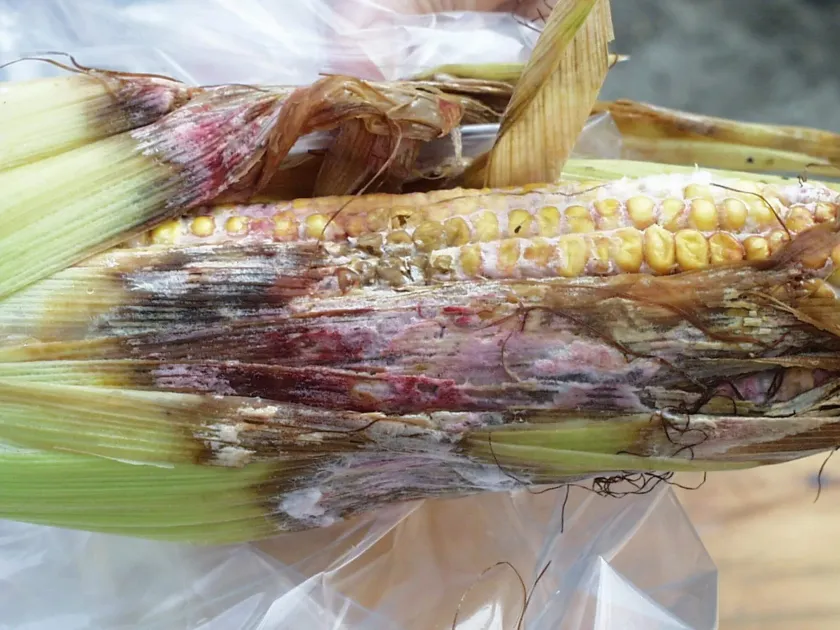
Description
Symptoms
Initial symptoms include the appearance of localized water-soaked spots that rapidly expand, turning brown or dark reddish-brown.
As the disease progresses, a fluffy mycelial growth appears on the surface, which may be white, pink, or yellowish. This represents the fungal sporulation stage.
The fruit loses structural integrity, becoming soft and mushy. Advanced stages of infection often result in the complete mummification of the fruit if left on the plant.
In crops like strawberries, the rot frequently starts on the side of the berry touching the soil, spreading rapidly upwards as the infection consumes the healthy tissue.
- Soft, discolored lesions on the fruit.
- Presence of visible fungal mycelium.
- Loss of firmness and integrity.
- Development of bitter off-flavors in fruit tissue.
- Rapid spread in storage if conditions are humid.
Pathogen
The causal agent of this disease is the fungus Gibberella pulicaris (anamorph: Fusarium sambucinum). It is a persistent soil-borne pathogen known for its ability to survive long periods in adverse conditions.
The fungus exists in the environment as mycelium, chlamydospores, and conidia. These resilient structures allow it to survive in plant debris and soil, making it a difficult pathogen to eradicate.
Infection typically begins through mechanical injuries on the fruit surface. Once entry is gained, the fungus colonizes the fruit tissue, secreting enzymes that lead to rapid degradation.
The pathogen's lifecycle involves both sexual and asexual reproduction, which enables it to adapt quickly and spread effectively across fields under conducive conditions.
Studies indicate that the fungus can persist in the vascular system of the host plant, acting as a latent infection that manifests as rot when the fruit begins to ripen.
Conditions for development
High humidity and moderate to warm temperatures are the primary drivers of Gibberella pulicaris infection. Prolonged rainfall during the harvest season creates high-risk scenarios.
Poor drainage in fields and heavy soil moisture levels encourage fungal activity. Excessive irrigation, especially overhead systems, can splash spores onto the fruit.
Dense canopy growth reduces airflow, creating microclimates with higher humidity levels that allow the fungus to thrive and infect neighboring fruits.
The presence of insect pests that damage the epidermis of the fruit creates entry points, significantly increasing the incidence of rot in the field.
Improper crop rotation allows for the accumulation of the pathogen's inoculum in the soil, leading to an increased severity of the disease each subsequent season.
Why it matters
Fusarium fruit rot is highly destructive, leading to significant yield losses. Affected produce loses all market value and cannot be stored for commercial distribution.
The disease poses a serious threat during post-harvest storage, where a single infected fruit can quickly infect others in the same crate, leading to mass spoilage.
Beyond the loss of physical produce, the metabolic activity of the fungus results in the production of mycotoxins, which are harmful if consumed by humans or livestock.
Plant vigor is often compromised, as the fungus can affect the overall health of the strawberry crown or plant stem, leading to reduced productivity in future cycles.
Increased production costs due to the need for continuous monitoring, fungicide applications, and post-harvest sanitation significantly impact farm profitability.
Protection
Effective management requires an integrated approach starting with the selection of resistant cultivars and appropriate site preparation to ensure good soil drainage.
Mulching the soil surface with plastic or clean straw is a critical preventive measure, as it prevents the fruit from making direct contact with the pathogen in the soil.
Strict sanitation practices, such as the prompt removal and destruction of infected fruit and debris, are essential to reduce the overall inoculum load in the field.
Chemical control involving systemic and contact fungicides should be applied preventatively during the flowering and fruit development stages, strictly following labels.
Optimizing plant spacing and utilizing proper ventilation techniques helps maintain a dry environment around the fruit, significantly inhibiting the development of the rot.
Pathogens and affected parts
Affects crops · 1
Discussion
No discussions yet — be the first.