
Yellow Aspergillus
Aspergillus flavus
Description
How to identify
Aspergillus flavus is a saprophytic soil fungus belonging to the phylum Ascomycota. It is a well-known pathogen that can colonize a wide range of organic substrates including living plant tissues.
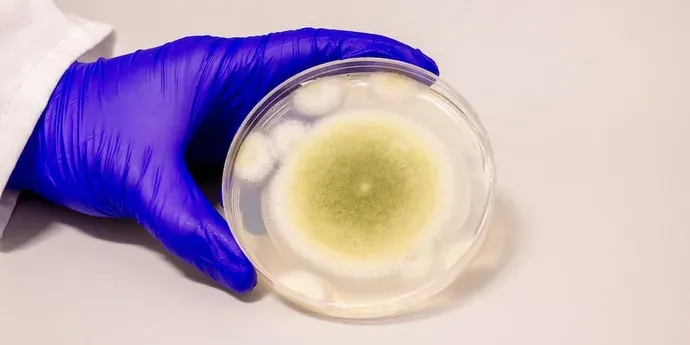
The fungus is characterized by the production of yellow-green conidia on conidiophores, which gives colonies a distinct powdery appearance. It grows rapidly on various nutrient media.
Taxonomically, it is placed in the genus Aspergillus, section Flavi. It is genetically diverse and includes both toxigenic and non-toxigenic strains.
The primary health concern associated with this species is its ability to produce aflatoxins, which are highly toxic, carcinogenic, and mutagenic secondary metabolites.
It exists primarily in the soil as dormant spores or mycelium, waiting for favorable conditions to germinate and colonize plant debris or vulnerable host tissues.
What it damages
The fungus affects numerous crops such as corn, peanuts, cottonseeds, tree nuts, and sorghum. Infection can occur both in the field and post-harvest during storage.
In corn, the pathogen infects ears, often facilitated by insect damage. It causes ear rot, leading to significant yield loss and grain quality degradation.
Aflatoxin contamination is the most severe form of damage, making the produce unsafe for human or animal consumption and causing massive economic losses globally.
The fungus also causes seedling blight and seed decay, reducing the germination rate and vigor of seeds, which affects stand establishment in subsequent seasons.
Damage to the seed coat by mechanical harvest or insect feeding provides entry points for Aspergillus flavus to colonize the interior of the seeds.
When it appears
Aspergillus flavus thrives in warm and humid environments. The optimal temperature range for growth is between 30°C and 37°C.
High relative humidity (above 85%) is a prerequisite for rapid mycelial growth and spore production, especially in stored products.
In the field, drought stress during the reproductive phase of the host plants increases susceptibility to infection by the pathogen.
Seasonal outbreaks are often linked to hot and dry growing seasons, followed by harvest time conditions that are conducive to fungal proliferation.
Post-harvest, the fungus becomes a major threat if grain moisture content exceeds 15%, leading to rapid colonization and potential heating of the grain bulk.
Signs of infestation
The most recognizable sign is the presence of yellow-green, powdery mold on the surfaces of seeds, kernels, or plant tissue.
In corn, mycelial mats can be found between kernels, eventually turning the ear into a mass of dusty, olive-green spores.
Stored grain may exhibit clumping, a musty odor, and discoloration as the fungus begins to colonize the seed embryos and internal tissues.
- Yellow-green sporulation on plant surfaces.
- Musty or sour odor in stored grain.
- Reduced germination and seed discoloration.
- Heat spots within stored grain bulks due to microbial activity.
Detection often requires lab analysis, such as ELISA or chromatography, to identify the presence and concentration of aflatoxins in the affected crop.
Control measures
Integrated Pest Management (IPM) is essential. Controlling insect pests is crucial, as they create entry wounds and transport spores onto the crops.
Good agricultural practices, including crop rotation and the removal of crop residues, help to reduce the primary inoculum load in the field.
Post-harvest management is the most critical control measure. Drying grain quickly to safe moisture levels (below 14%) prevents fungal growth.
Maintaining clean, dry, and well-ventilated storage facilities is imperative to inhibit the spread of the fungus during long-term storage.
Biocontrol agents, such as non-toxigenic strains of Aspergillus flavus, have been successfully applied to fields to outcompete and displace harmful toxigenic populations.
Causes diseases · 4
Discussion
No discussions yet — be the first.