
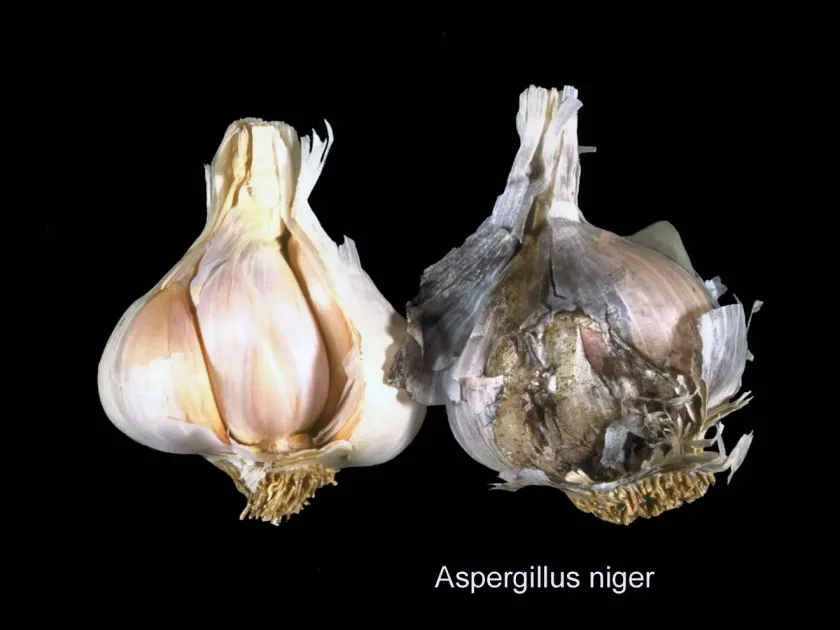
Description
Symptoms
The most visible symptom is the appearance of a dusty, powdery mold on the surface of seeds or seedlings. The color ranges from black to yellow-green or brown, depending on the fungal species.
In cases of seed rot, the seeds decay within the soil before emergence, leading to patchy crop establishment and reduced plant density.
On maize, the fungus often colonizes damaged kernels on the ear, creating large patches of felt-like mold that can compromise the entire grain quality.
Seedlings that do emerge from infected seeds often look chlorotic, stunted, and necrotic, with roots showing signs of brown discoloration and decay.
- visible powdery mold on seed surfaces
- pre-emergence seed decay
- stunted or chlorotic seedling growth
- musty or moldy odor from grain
- poor germination rate and vigor
Pathogen
The disease is caused by fungi of the genus Aspergillus, most notably Aspergillus niger and Aspergillus flavus. These are widespread saprophytic fungi that can act as opportunistic pathogens.
They survive in soil and on plant debris as spores, known as conidia. These spores are highly resilient and can be easily disseminated by wind, water, and mechanical handling.
The fungus infects the seed coat, penetrating through microscopic cracks or injuries caused during harvesting or transport. Once inside, the mycelium begins to grow rapidly.
The metabolic activity of the fungus consumes the energy reserves of the seed, preventing it from germinating or causing the death of the embryo soon after germination.
Certain strains of Aspergillus produce mycotoxins, which pose significant health risks to both humans and livestock if contaminated grain enters the food chain.
Conditions for development
High humidity is the primary driver of Aspergillus development. Germination of spores and subsequent mycelial growth are favored when relative humidity exceeds 70-80%.
These fungi are thermophilic, meaning they thrive in warm conditions. Temperatures ranging from +25°C to +35°C are optimal for rapid infection.
Improper seed storage, characterized by poor ventilation and moisture buildup, allows spores to colonize the seed surface before it is even planted.
Extended periods of cool, wet weather after planting delay the germination process, leaving the seed vulnerable to fungal attack in the soil for a longer duration.
Physical injuries to the seed coat, often resulting from improper mechanical threshing or handling, create easy entry points for the pathogen.
Why it matters
The main impact of this disease is the significant reduction in crop stand density. Failed germination forces farmers to invest in replanting, increasing overall production costs.
The accumulation of aflatoxins in infected corn renders the grain toxic, causing economic losses as the crop may be rejected by elevators or feed processors.
Infected seeds lose their seedling vigor, which makes them more susceptible to other soil-borne diseases and environmental stressors during the early stages of growth.
Market value is negatively affected by mold contamination, which discolors the grain and leads to physical degradation of the kernel structure.
The potential for large-scale contamination of grain stores can result in significant losses of stored commodities if not properly managed.
Protection
The most effective strategy is the use of high-quality, certified seeds that have been properly cleaned, graded, and treated with appropriate systemic fungicides.
Implementing proper seed storage techniques, such as maintaining moisture levels below 14% and ensuring adequate ventilation, prevents fungal proliferation in the storehouse.
Optimizing planting time to ensure rapid soil warming helps seeds germinate quickly, effectively "escaping" the period of highest risk for fungal infection.
Integrated pest management (IPM) to control insects that damage corn ears is essential to reduce the injury sites where Aspergillus fungi typically gain entry.
Proper harvesting techniques that minimize mechanical damage to the seeds significantly reduce the risk of secondary infections and ensure longer grain shelf-life.
Pathogens and affected parts
Affects crops · 1
Discussion
No discussions yet — be the first.