Late-season triploid variety obtained at the All-Russian Research Institute of Fruit Crop Selection from a cross in 1982 between Orlik and Papировка tetraploid. The variety was accepted for State Testing in 2002. Breeders: E. N. Sedov, Z. M. Serova, G. A. Sedysheva, E. A. Dolmatov.
Trees are large with rounded crowns. Main branches emerge from the trunk at nearly straight angles. Branches are spaced widely, and branch tips point upward. Bark on the trunk and main branches is gray.
Shoots are thick, straight, slightly curved, round in cross-section, brown, hairy. Buds are pressed against the shoot, medium-sized, conical, hairy. Leaves are large, broad, oval-shaped, bluntly pointed, with spirally twisted tips, light green, wrinkled, matte, with coarse venation. Leaf blade is concave, moderately hairy. Leaf margin is finely toothed. Some leaves are spoon-shaped (with raised margins). Petiole is medium-length, thick, hairy. Flower buds are hairy, large, rounded.
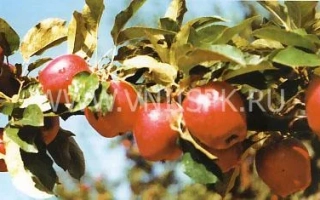
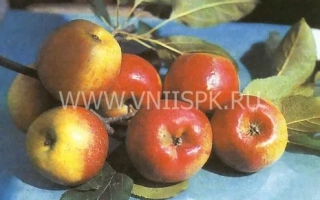
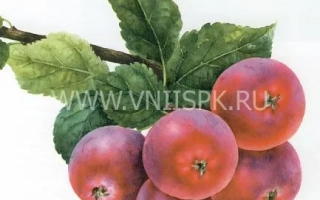
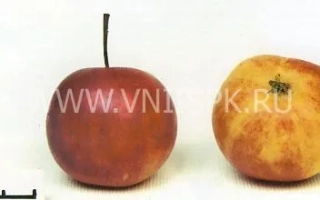
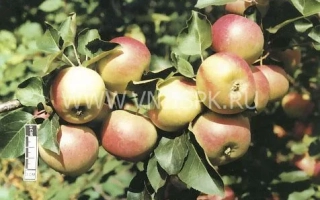
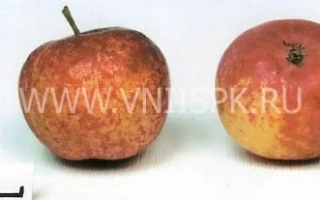
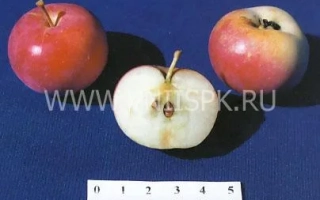
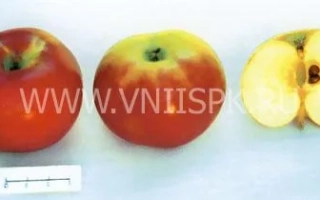
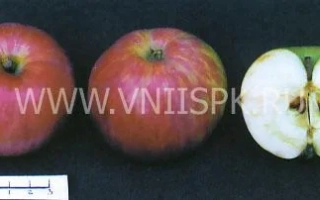
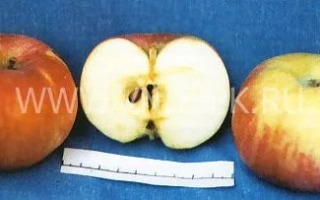
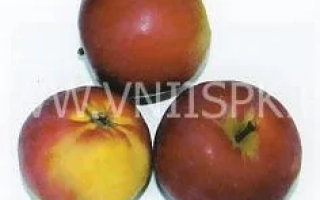
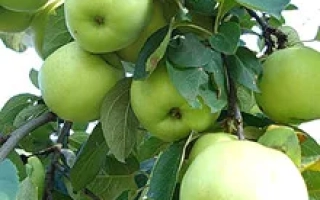
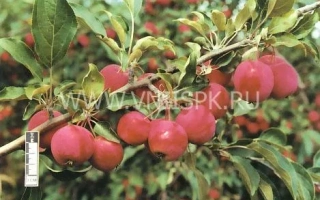
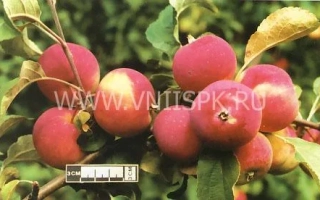
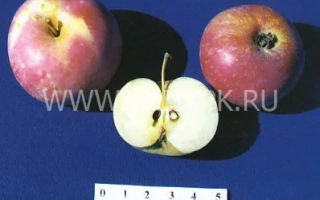
Fruits are above-average size (160 g), one-dimensional, elongated, conical, broad-ribbed, slightly tapered. Skin is smooth and glossy. Main fruit color is green at harvest and greenish-yellow at consumer ripeness. Surface coloration is a blurred reddish blush (see Fig. ). Numerous, large, clearly visible lenticels. Due to high attractiveness, fruits are rated 4.4–4.5 points. Peduncle is medium-length and thickness, curved. Calyx is acute-conical, medium-width, rust-colored. Receptacle is closed. Disk is small, broad, ribbed. Heart is medium-sized bulbous. Seed chambers are open. Sub-receptacular tube is long, sac-like. Seeds are underdeveloped, thin, light-brown.
Fruit flesh is greenish, medium density, coarse-grained, juicy, tart-sweet, excellent flavor (4.4 points). Chemical composition of the fruit: sugars — 10.1%, titratable acidity — 0.76%, ascorbic acid — 13.0 mg/100g.
Harvesting ripeness in the Oryol region occurs from August 15–20, and the consumer period lasts about a month.
Yield is high. Young 5–8-year-old trees of this variety produced 23 kg per tree, whereas same-aged trees of the control variety Melba produced only 12 kg.
The variety is relatively resistant to scab. Maximum leaf damage by scab is 1.0 point, and fruit damage — 1.5 points. Variety Melba is affected by scab at 3.0 and 3.5 points respectively. During the study period, the variety had no serious frost damage.
Advantages of the variety: high fruit marketability, dessert-like fruit flavor.