
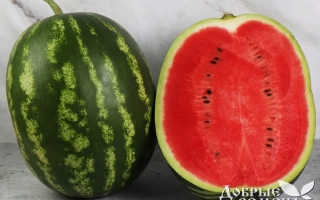

SKU #62690
·
47 views
WHITE ROSES
Watermelon
Соколов Сергей ДмитриевичUser rating
0 votes0% positive reviews
No ratings yet — be the first.
Seed Type
Fine Seed
Beginning of ripening
50-60 days
Fruit; flesh color
White
Fruit; shape
Round
Store offers · 10 from 5 stores
Prices are updated on loadLoading offers…
Available at: Agrosotka · Baza Proraba · LuckyFlowers · Счастливый Сад · Райська Долина
Aggregator catalog: prices are collected automatically from store websites, normalized by AI and converted at the current exchange rate. Before ordering, confirm the price and availability on the store's website. This block is not indexed by search engines — the data is loaded after the page opens.
About product

Watermelon 'White Roses' is an ultra-early variety with white flesh, known for its rapid maturation and high yield. The period from emergence to the first harvest is only 57-62 days, allowing it to be grown even in open ground in the central region. The plant is compact and highly productive; in southern regions, up to seven portion-sized fruits weighing up to 3.5 kg each can be obtained from a si…
Seed Type
Fine Seed
Beginning of ripening
50-60 days
Fruit; flesh color
White
Fruit; shape
Round
Description
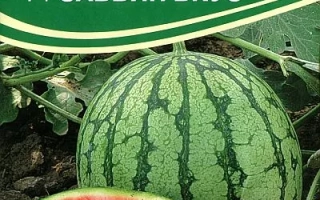
Watermelon 'White Roses' is an ultra-early variety with white flesh, known for its rapid maturation and high yield. The period from emergence to the first harvest is only 57-62 days, allowing it to be grown even in open ground in the central region. The plant is compact and highly productive; in southern regions, up to seven portion-sized fruits weighing up to 3.5 kg each can be obtained from a single bush. The fruits have an oval shape, light green rind with vein patterns, and creamy-white, tender, juicy flesh that is hypoallergenic and very sweet.
The 'White Roses' variety has excellent taste qualities and resistance to adverse weather conditions, including drought. The fruits withstand transportation and storage well, do not crack, ensuring high market quality. Due to the low-seed structure of the flesh, the watermelon is particularly pleasant to eat and suitable for people sensitive to allergens.
In greenhouse cultivation techniques, plants are tied to trellises and formed into a single stem, removing side shoots up to a height of 50 cm and pinching subsequent ones after the third leaf. In open ground, it is recommended to pinch the top for better fruit formation. The variety was bred in Russia by breeder Artem Sokolov and belongs to the Cucurbitaceae family, species Citrullus lanatus.
The 'White Roses' variety has excellent taste qualities and resistance to adverse weather conditions, including drought. The fruits withstand transportation and storage well, do not crack, ensuring high market quality. Due to the low-seed structure of the flesh, the watermelon is particularly pleasant to eat and suitable for people sensitive to allergens.
In greenhouse cultivation techniques, plants are tied to trellises and formed into a single stem, removing side shoots up to a height of 50 cm and pinching subsequent ones after the third leaf. In open ground, it is recommended to pinch the top for better fruit formation. The variety was bred in Russia by breeder Artem Sokolov and belongs to the Cucurbitaceae family, species Citrullus lanatus.
Video · 2 videos
Suggest a video →Crop & resistance
Crop
Specifications hover over for a hint about the specification
|
Seed Type
Seed Type
Seedless Type Triploid watermelon hybrids in which seeds are represented as underdeveloped rudiments. Almost absent. Seed Type Seeds are present, mass from 20 to 80 grams per 1000 seeds |
|
|---|---|
|
Beginning of ripening
Beginning of ripening
From germination to flowering, it takes 60 to 140 days depending on the variety. |
50-60 days |
|
Fruit; flesh color
Fruit; flesh color
Color of the fruit flesh. There are red, pink, yellow, and brown colors. |
|
|
Fruit; shape
Fruit; shape
Spherical, oval, flattened or cylindrical shape. |
|
|
Fruit; weight
Fruit; weight
Table watermelons weigh 0.6-16 kg. |
1.5-3.0 kg |
| Registration year | 2021 |
| Catalog | Catalog → Watermelon |
| Manufacturer | Соколов Сергей Дмитриевич |
| Country | Russia |
Not yet комментариев. Be the first!
Alternatives
Watermelon seeds · similar varieties




See also
Often considered together with this variety




Recently viewed
Products you’ve viewed on this site
Reviews · 0