


SKU #44458
·
40 views
Eureka F1
Watermelon
MONSANTOUser rating
0 votes0% positive reviews
No ratings yet — be the first.
Seed Type
Fine Seed
Beginning of ripening
50-60 days
Fruit; flesh color
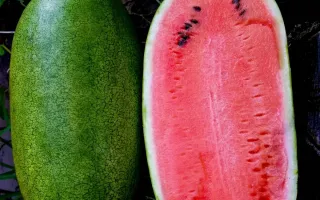
Red
Fruit; shape
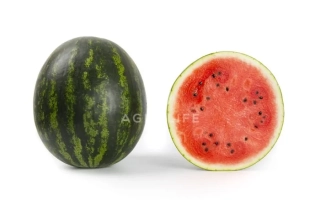
Oval-shaped
About product

An ultra-early hybrid with high Fusarium resistance and stable marketable weight for intensive markets.
Seed Type
Fine Seed
Beginning of ripening
50-60 days
Fruit; flesh color
Red
Fruit; shape
Oval-shaped
Description
Genetic Architecture of the Hybrid
The «Eureka F1» watermelon from the American breeding house Monsanto represents a prime example of high-tech selection focused on intensive vegetable production. The key feature of this hybrid is its ultra-early vegetation cycle of just 50–60 days from transplanting. This engineering solution allows farmers to schedule continuous harvests and enter the market during peak price periods.
Phytopathological Protection
Disease resistance in «Eureka F1» is embedded at the level of selective markers. The crop demonstrates pronounced resistance to Fusarium wilt (Fusarium oxysporum), which is critical for soils under intensive agricultural use. Additional tolerance to anthracnose minimizes the risk of fruit spoilage during moisture fluctuations in the ripening period. This reduces the need for fungicide treatments, enhancing the model's economic efficiency.
Technical Fruit Parameters
- Morphology: The round-elongated shape ensures optimal weight distribution, facilitating transport and crate stacking without damaging the rind.
- Weight: The stable 5.0–8.0 kg range is the industry's "gold standard" for retail chains, where demand for individual-sized watermelons is highest.
- Seed Apparatus: The small-seed structure inside the fruit is the result of rigorous parental line selection aimed at increasing the edible portion of the pulp.
- Organoleptics: The deep red color of the pulp is achieved through intensive lycopene accumulation, which, combined with high sugar content, provides a significant market shelf advantage.
Integrating these characteristics turns «Eureka F1» into an instrument for predictive business, where every stage—from seed placement to harvest—is governed by strict Monsanto standards.
Crop & resistance
Crop
Disease resistance
Specifications hover over for a hint about the specification
|
Seed Type
Seed Type
Seedless Type Triploid watermelon hybrids in which seeds are represented as underdeveloped rudiments. Almost absent. Seed Type Seeds are present, mass from 20 to 80 grams per 1000 seeds |
|
|---|---|
|
Beginning of ripening
Beginning of ripening
From germination to flowering, it takes 60 to 140 days depending on the variety. |
50-60 days |
|
Fruit; flesh color
Fruit; flesh color
Color of the fruit flesh. There are red, pink, yellow, and brown colors. |
|
|
Fruit; shape
Fruit; shape
Spherical, oval, flattened or cylindrical shape. |
|
|
Fruit; weight
Fruit; weight
Table watermelons weigh 0.6-16 kg. |
5.0-8.0 kg |
| Registration year | 2001 |
| Catalog | Catalog → Watermelon |
| Manufacturer | MONSANTO |
| Country | USA |
Store offers
Prices are updated on loadLoading offers…
Aggregator catalog: prices are collected automatically from store websites, normalized by AI and converted at the current exchange rate. Before ordering, confirm the price and availability on the store's website. This block is not indexed by search engines — the data is loaded after the page opens.
Not yet комментариев. Be the first!
Alternatives
Watermelon seeds · similar varieties





See also
Often considered together with this variety




Recently viewed
Products you’ve viewed on this site
Reviews · 0