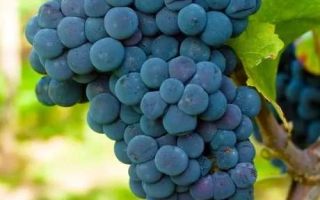
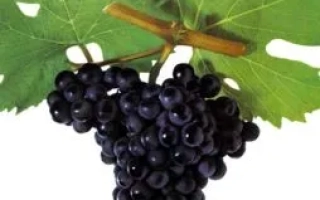
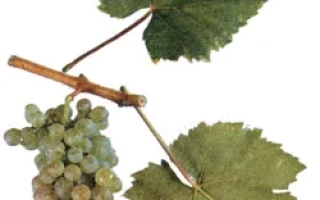
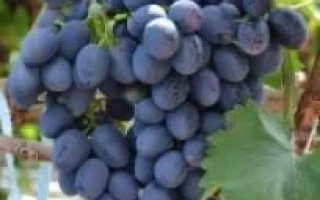
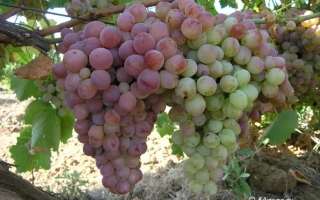
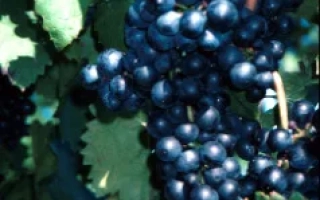
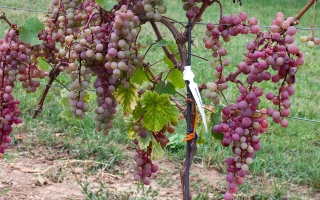
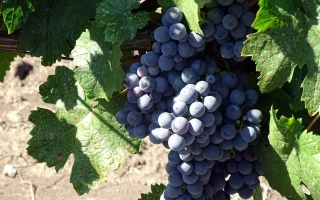
Aleatico — a technical grape variety with medium-late ripening, originating from Italy, with ancient roots, likely of Greek origin. The grape was introduced to Crimea in 1830 and spread to Uzbekistan and other post-Soviet countries in the second half of the 19th century. This variety belongs to the western European eco-geographic group and is characterized by tall, upright vines with dark green leaves featuring bronze margins. Bunches are medium-sized, berries are black with a bluish waxy bloom, giving them a distinctive appearance.
Aleatico requires high heat and does not tolerate low-lying areas, where the above-ground part of the vine often freezes. The variety is sensitive to drought but responds well to irrigation, which is crucial for successful cultivation. It is susceptible to diseases such as mildew, oidium, bacterial cancer, and also vulnerable to gray rot and phylloxera, requiring careful care and plant protection.
This grape is widely used for producing dessert red muscat wines and in blends, thanks to its unique flavor and aroma. Aleatico produces wines with strong regional character, emphasizing its historical and cultural value in winemaking, especially in central Italy and regions where it has become established.