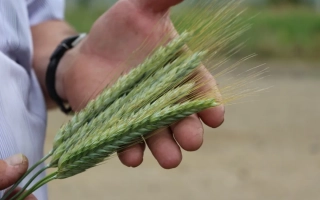
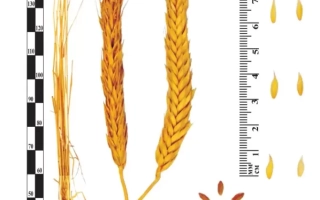
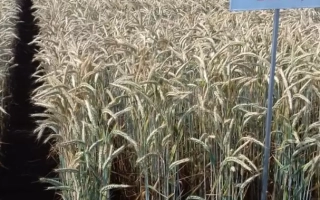
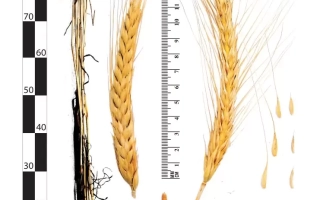
SEIM 20 is a winter triticale variety developed by the Federal Rostov Agrarian Scientific Center, intended for grain use and recommended for cultivation in the Central and Central Black Earth regions, as well as in the Ryazan, Smolensk, Tula, and Tambov regions. This hexaploid variety is characterized by a medium-early heading date, a medium plant height from 83 to 103 cm, and red grain with a 1000-grain weight of 46–48 g. The vegetative period ranges from 295 to 311 days, ensuring optimal crop development in the specified regions.
SEIM 20 is distinguished by its high yield: in the Central Black Earth region, it reached 68.3 c/ha, with an increase of 3.1 c/ha over the average standard, while the maximum grain yield was recorded in the Lipetsk region at 96.8 c/ha. In the Ryazan, Smolensk, and Tula regions, yields also exceeded average indicators by 6.1 c/ha, 9 c/ha, and 5.2 c/ha, respectively. The variety exhibits enhanced resistance to lodging and drought, high resistance to shattering, medium winter hardiness, and frost resistance comparable to the Consul variety.
Furthermore, SEIM 20 is characterized by high protein content in the grain—ranging from 10.5% to 14.1%—making it in demand in the baking industry. Triticale, as a crop, combines wheat and rye genotypes, ensuring the versatility of grain use for bread production, alcohol, and animal feed. Thanks to its agronomic and technological qualities, the SEIM 20 variety is a promising choice for agricultural enterprises focused on obtaining high-quality grain and stable yields.