


SKU #67004
·
42 views
Triticale TRUDIAGA
Triticale
Prices in stores
No offers yet — stores have not added prices for this product yet.
Similar varieties with prices
-
RufusSaaten-Union
from 2.63 €
-
 ROVNYAVerkhnevolzhsky FANTS
from 0.97 €
ROVNYAVerkhnevolzhsky FANTS
from 0.97 €
-
 Kharkivskaya Support
from 0.38 €
Kharkivskaya Support
from 0.38 €
-
 AyaksPrivate enterprise Sort
from 6.04 €за л
AyaksPrivate enterprise Sort
from 6.04 €за л
Type
Winter triticale
Registration year
2019
Your mark
0 votes
0% positive ratings
Description
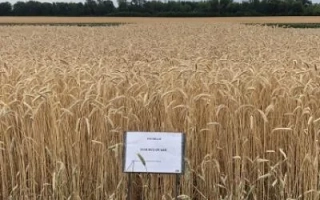
Trudiaga is a winter triticale variety, a hybrid agricultural crop obtained through the selection of wheat and rye. This cereal is distinguished by high resistance to adverse conditions, including drought and frost, as well as enhanced nutritional value. The plant is characterized by large leaves, a long semi-erect stem, and a white, long, fully awned head. The mass of 1000 grains is approximately 50.8 grams, indicating the large-grained nature of the variety.
The Trudiaga variety is intended for use both as fodder and for food purposes, including prospective application for producing baking flour and bioethanol. It is distinguished by high yield - in the Central Black Earth region the average figure reaches 58.4 c/ha, and in the North Caucasus - 53.7 c/ha. The plant responds well to increased fertilizer doses and requires sowing in the third decade of September. The variety is resistant to diseases, in particular it is weakly affected by brown rust and septoria, which increases its reliability in terms of agronomy.
Studies of the morphophysiological and technological properties of the Trudiaga variety show its high nutritional value and good rheological parameters of the grain, which confirms its baking potential. The influence of cultivation technologies on yield and grain quality has been studied using biotechnological methods, which contributes to the creation of new breeding material and improvement of crop characteristics. Thanks to its unpretentiousness to soils and resistance to pests, triticale Trudiaga is a prospective crop for various regions with different climatic conditions.
The Trudiaga variety is intended for use both as fodder and for food purposes, including prospective application for producing baking flour and bioethanol. It is distinguished by high yield - in the Central Black Earth region the average figure reaches 58.4 c/ha, and in the North Caucasus - 53.7 c/ha. The plant responds well to increased fertilizer doses and requires sowing in the third decade of September. The variety is resistant to diseases, in particular it is weakly affected by brown rust and septoria, which increases its reliability in terms of agronomy.
Studies of the morphophysiological and technological properties of the Trudiaga variety show its high nutritional value and good rheological parameters of the grain, which confirms its baking potential. The influence of cultivation technologies on yield and grain quality has been studied using biotechnological methods, which contributes to the creation of new breeding material and improvement of crop characteristics. Thanks to its unpretentiousness to soils and resistance to pests, triticale Trudiaga is a prospective crop for various regions with different climatic conditions.
Crop & resistance
Disease resistance
Specifications
| Type | |
|---|---|
| Registration year | 2019 |
| Catalog | Catalog → Triticale |
| Legal data |
Show · 2
|
| Country | Russia |
No reviews yet. Be the first to share your experience.
Alternatives
Triticale seeds · similar varieties






See also
Often considered together with this variety




Recently viewed
Products you’ve viewed on this site
Reviews