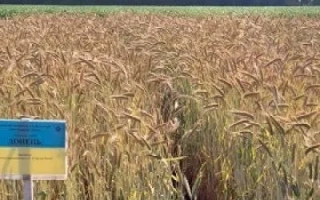
Amphidiploid 256 is a winter triticale variety developed by the Institute of Plant Industry named after V.Ya. Yur'ev of NAAN and registered in 2001. It is recommended for cultivation in the Steppe, Forest-Steppe, and Polissia regions, indicating its adaptability to different climatic conditions. The variety belongs to the mid-late maturing group with a vegetation period of 278-289 days and is characterized by high winter hardiness (8.0-8.5 points) and drought resistance. Plant height ranges from 90 to 140 cm, ensuring optimal conditions for grain formation.
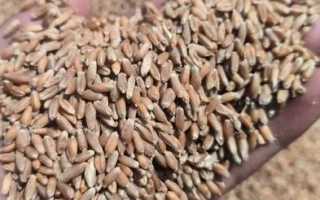
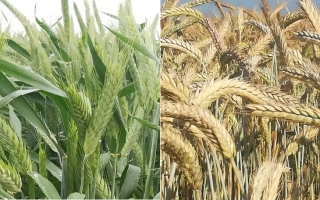
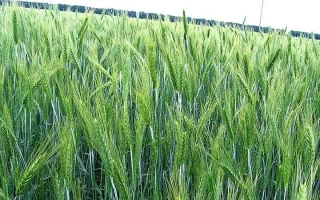
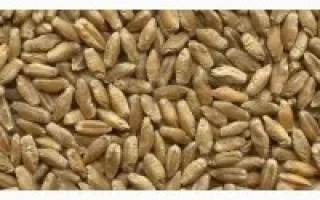
Morphologically, Amphidiploid 256 belongs to the milletum (lutescens) subspecies. The ear has a white coloration, spindle-shaped form, 9-12 cm long, dense, with short, toothed awns. The grain is red, elongated, very large, with a 1000-grain weight of 55-60 g. Husk under the ear is weak or absent in most plants. The plant has a slender form, which contributes to resistance to leaf and stem diseases.
Amphidiploid 256 is a high-yielding variety with potential grain yield exceeding 10 t/ha and green mass up to 60 t/ha. Grain quality is characterized by high protein content (13.5%) and starch (68%), making it suitable for feed, fodder, and technical use. Alcohol yield from 1 ton of press cake is 460 liters. The variety is not demanding regarding soil types and preceding crops; recommended sowing dates are from September 5 to 25, with seeding rates of 3-4.5 million viable seeds per hectare depending on growing conditions.