


SKU #49420
·
59 views
YAKUDZA
Tomato
OOO 'GLOBAL SIDS'User rating
0 votes0% positive reviews
No ratings yet — be the first.
Product Type
Seeds; Seed material
Plant Type
Determinant
Maturation Period
Up to 90 days
Fruit Shape
Flat-round
About product

A high-yielding pink tomato hybrid that delivers consistent quality and harvest speed for commercial operations.
Product Type
Seeds; Seed material
Plant Type
Determinant
Maturation Period
Up to 90 days
Fruit Shape
Flat-round
Description
Field performance of the Yakuza tomato
When selecting a determinate hybrid for professional farming, reliability is the number one priority. "Yakuza" from "Ooo Global Sids" offers a predictable production cycle that allows for precise planning of labor and logistics.
Technical specifications and crop management
- Maturity cycle: Reaches harvest stage within 90 days. This accelerated timeline is an operational advantage, as it allows farmers to finish the harvest before the peak of late-season blights and fungal pressures.
- Plant structure: The determinate growth habit ensures a compact plant, significantly reducing the labor costs associated with pruning and vertical trellising.
- Yield efficiency: With proper drip irrigation and fertigation, yields of 100-130 tons per hectare are standard for this hybrid, making it a highly competitive choice for large-scale operations.
Fruit characteristics and post-harvest handling
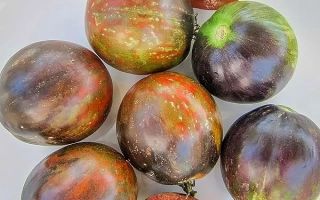
The fruits feature a consistent, flattened-round shape, which is highly desired for standard grading and packing boxes. The pink skin tone is a strong market differentiator, often commanding a premium price compared to standard red varieties due to consumer preference for sweeter profiles. The epidermis is resilient enough to handle transportation across regional supply chains without significant bruising or quality loss.
Operational insights
To maximize the potential of seeds provided by "Ooo Global Sids," monitor nitrogen levels early in the season to prevent excessive vegetative growth that could suppress fruit set. During the fruit development stage, stable moisture management is essential to maintain fruit uniformity. Farmers find that this hybrid’s uniform ripening pattern allows for concentrated harvesting, which optimizes labor efficiency during peak collection periods. Overall, it is a robust, low-maintenance choice for those looking for high-volume, market-ready tomato production.
Crop & resistance
Crop
Specifications hover over for a hint about the specification
| Product Type | |
|---|---|
| Plant Type | |
|
Maturation Period
Maturation Period
Vegetation period from emergence to technical maturity 30-50 days. |
Up to 90 days |
|
Fruit Shape
Fruit Shape
Modern tomato varieties have a diverse fruit shape: flat, flat-round, round, oval, elongated-oval, pear-shaped, plum-shaped, cube-shaped, and cylindrical. On poorly fertile soils and under unfavorable growing conditions, tomato fruits may take on a more rounded shape. |
|
|
Fruit Color
Fruit Color
The fruit color of tomato varieties is influenced by the combination of skin and flesh color. Some varieties have transparent skin, others — yellow. When combined differently, the fruits can acquire quite diverse colors. The fruit color is affected by pigments (lycopene) and thei... |
|
|
Yield
Yield
Overall bulb harvest per unit area. Depends on both onion variety characteristics and agronomic practices, fertilizers, and irrigation. Under optimal growing conditions, an onion yield of 100 tons per hectare and above is not considered record-breaking. |
100-130 tons |
| Registration year | 2022 |
| Catalog | Catalog → Tomato |
| Manufacturer | OOO 'GLOBAL SIDS' |
| Legal data |
Show · 1
|
| Country | Russia |
Store offers
Prices are updated on loadLoading offers…
Aggregator catalog: prices are collected automatically from store websites, normalized by AI and converted at the current exchange rate. Before ordering, confirm the price and availability on the store's website. This block is not indexed by search engines — the data is loaded after the page opens.
Not yet комментариев. Be the first!
Alternatives
Tomato seeds · similar varieties






See also
Often considered together with this variety






Recently viewed
Products you’ve viewed on this site
Reviews · 0