


SKU #63640
·
65 views
STRAUSSLING
Soybean
User rating
0 votes0% positive reviews
No ratings yet — be the first.
Growing Season
110-120 days
Plant; plant height
60-70cm
Plant: Height of Lower Pod Attachment
18-20cm
Seeds: oil content
18-19%
About product

Soybeans of the Strau ssling variety are recommended for cultivation in the Far East region, including the Amur region and Khabarovsk Krai. This variety is characterized by a medium-early maturity period with a vegetative period of about 110-115 days, averaging 112 days. Plants are of a determinate growth type, medium height — about 70 cm, with purple flowers and reddish-brown pubescence on the ma…
Growing Season
110-120 days
Plant; plant height
60-70cm
Plant: Height of Lower Pod Attachment
18-20cm
Seeds: oil content
18-19%
Description
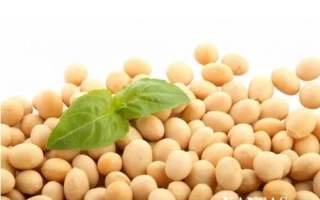
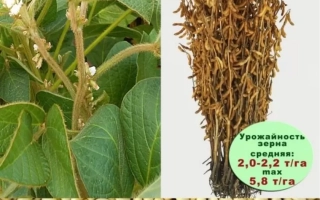
Soybeans of the Strau ssling variety are recommended for cultivation in the Far East region, including the Amur region and Khabarovsk Krai. This variety is characterized by a medium-early maturity period with a vegetative period of about 110-115 days, averaging 112 days. Plants are of a determinate growth type, medium height — about 70 cm, with purple flowers and reddish-brown pubescence on the main stem. Leaves are trifoliate, with pointed-ovate lateral leaflets, while lower pods attach at a height of up to 20 cm from the soil. Seeds are yellow, oval-elongated in shape with a smooth surface and an oval-shaped gray hilum. The mass of 1000 seeds is approximately 197 g, protein content in seeds reaches 39.7-40.5%, and fat content is 18.3-19.5%. Average yield in the region is about 17.5 centners/ha, while the maximum yield achieved on experimental plots can reach 30.6-33.1 centners/ha. The variety is distinguished by high productivity and adaptation to the climatic conditions of the Far East, confirmed by stable yield indicators in various districts of the region. For planting the Strau ssling variety, sowing dates from May 5 to May 23 are recommended when soil temperature reaches 10 °C at a depth of seed sowing of about 5 cm. Various sowing methods are possible, including narrow-row and wide-row with interrow spaces of 15, 30, or 45 cm. Optimal plant density at harvest is 450-500 thousand plants per hectare. Due to its characteristics and high yield indicators, the Strau ssling variety is a promising choice for agricultural producers focused on growing soybeans in the Far East region.
Crop & resistance
Crop
Disease resistance
Specifications
| Growing Season | 110-120 days |
|---|---|
| Plant; plant height | 60-70cm |
| Plant: Height of Lower Pod Attachment | 18-20cm |
| Seeds: oil content | 18-19% |
| Seeds: protein content | 39-41% |
| Registration year | 2018 |
| Catalog | Catalog → Soybean |
| Legal data |
Show · 2 |
| Country | Russia |
Store offers
Prices are updated on loadLoading offers…
Aggregator catalog: prices are collected automatically from store websites, normalized by AI and converted at the current exchange rate. Before ordering, confirm the price and availability on the store's website. This block is not indexed by search engines — the data is loaded after the page opens.
Not yet комментариев. Be the first!
Alternatives
Soybean seeds · similar varieties




See also
Often considered together with this variety






Recently viewed
Products you’ve viewed on this site
Reviews · 0