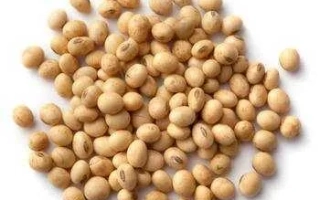
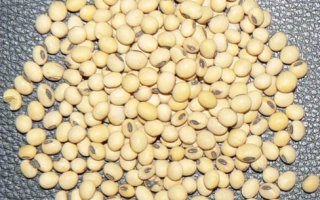
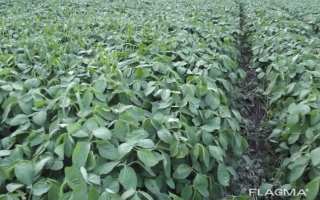
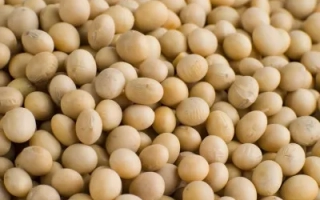
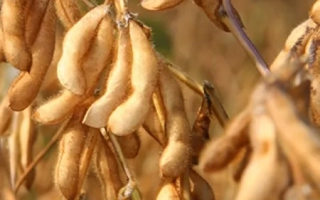
Soybean variety Regina is an early-maturing semi-determinate variety recommended for cultivation in forest-steppe and steppe zones, and included in the State Register for the North Caucasus and Far Eastern regions of Russia. Plants reach a height of about 60-61 cm, have purple flowers and yellow seeds with a dark-brown hilum. The vegetation period ranges from 108 to 112 days, ensuring early maturity and the possibility of harvest within a short time. The average weight of 1000 seeds varies from 167 to 174 grams, indicating the variety's large-seeded nature.
Soybean Regina is distinguished by high protein content in seeds — from 40.4% to 41.85%, as well as significant oil content — up to 20.7%. These characteristics make it attractive for use in food industry and feed production. The plants are resistant to diseases and stress factors, enhancing harvest reliability. The recommended seeding density at harvest time is 550 thousand plants per hectare.
Yield varies depending on region and growing conditions: in the North Caucasus region, average yield reaches 16 centners/ha with a maximum of 35 centners/ha, while in the Far Eastern region — 20.2 centners/ha with a maximum of 39.5 centners/ha. The height of attachment of the lower pod ranges from 9.3 to 12 cm, facilitating harvest. All these characteristics make the Regina variety an advantageous choice for farmers seeking high-quality, high-protein soybean yields.