


SKU #66354
·
37 views
Sorghum Sevilla
Sorghum
Rossorgo Research InstituteUser rating
0 votes0% positive reviews
No ratings yet — be the first.
Direction
Silage
Vegetation Period
90-100 days
Plant; height
180-200cm
Registration year
2015
About product

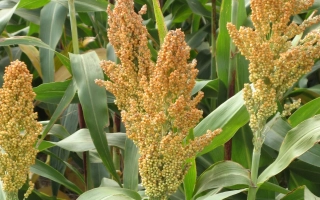
SEVILLA — a mid-early sugar sorghum (Sorghum bicolor) variety intended for cultivation in the Urals region. The plants are tall, reaching 178–192 cm in height, with well-foliaged stems. Seedlings have weak anthocyanin pigmentation; leaves are green with medium color intensity, and the midrib of the flag leaf is lighter with slight bleaching. The panicle is symmetrical, of medium length, loose or m…
Direction
Silage
Vegetation Period
90-100 days
Plant; height
180-200cm
Registration year
2015
Description
SEVILLA — a mid-early sugar sorghum (Sorghum bicolor) variety intended for cultivation in the Urals region. The plants are tall, reaching 178–192 cm in height, with well-foliaged stems. Seedlings have weak anthocyanin pigmentation; leaves are green with medium color intensity, and the midrib of the flag leaf is lighter with slight bleaching. The panicle is symmetrical, of medium length, loose or medium density, with a medium or long neck. Spikelet glumes vary from short to medium length.
The variety is characterized by a long vegetation period of 97–114 days, allowing its use as a mid-early option for fodder production. Grain yield ranges from 2.1 to 3.2 tons per hectare, while green mass yield is from 20.7 to 26.5 tons per hectare. The weight of 1000 grains is 24 grams. Stems contain a high level of sugars — from 17.9% to 19.3%, making the variety suitable for silage both pure and in mix with other cereal crops with lower sugar content.
SEVILLA is recommended for use as green fodder, silage, and ensilage, making it a universal fodder crop for agriculture. For sowing, 10–12 kg of conditioned seeds per hectare are required with a row spacing of 70 cm, or 13–18 kg with 45 and 30 cm row spacing. The variety combines high productivity and good agronomic characteristics, ensuring stable yields and quality fodder raw materials.
The variety is characterized by a long vegetation period of 97–114 days, allowing its use as a mid-early option for fodder production. Grain yield ranges from 2.1 to 3.2 tons per hectare, while green mass yield is from 20.7 to 26.5 tons per hectare. The weight of 1000 grains is 24 grams. Stems contain a high level of sugars — from 17.9% to 19.3%, making the variety suitable for silage both pure and in mix with other cereal crops with lower sugar content.
SEVILLA is recommended for use as green fodder, silage, and ensilage, making it a universal fodder crop for agriculture. For sowing, 10–12 kg of conditioned seeds per hectare are required with a row spacing of 70 cm, or 13–18 kg with 45 and 30 cm row spacing. The variety combines high productivity and good agronomic characteristics, ensuring stable yields and quality fodder raw materials.
Crop & resistance
Crop
Specifications hover over for a hint about the specification
|
Direction
Direction
Existing varieties and types of cabbage are grown for fresh consumption, long-term storage, and technical processing. |
|
|---|---|
| Vegetation Period | 90-100 days |
| Plant; height | 180-200cm |
| Registration year | 2015 |
| Catalog | Catalog → Sorghum |
| Manufacturer | Rossorgo Research Institute |
| Legal data | |
| Country | Russia |
Store offers
Prices are updated on loadLoading offers…
Aggregator catalog: prices are collected automatically from store websites, normalized by AI and converted at the current exchange rate. Before ordering, confirm the price and availability on the store's website. This block is not indexed by search engines — the data is loaded after the page opens.
Not yet комментариев. Be the first!
Alternatives
Sorghum seeds · similar varieties





See also
Often considered together with this variety







Recently viewed
Products you’ve viewed on this site
Reviews · 0