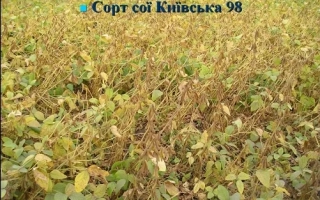
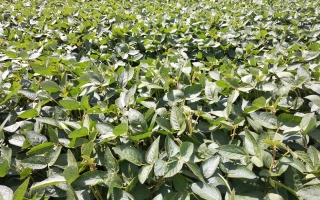
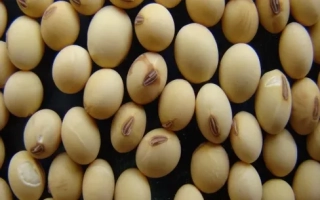
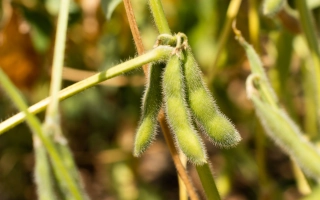
Soybean variety Kassidy is a mid-season hybrid with a vegetative period of 110 to 120 days, ensuring optimal maturity under various climatic conditions. Plants reach a height of approximately 70-75 cm, and the height of the lower pod attachment varies from 8 to 12.5 cm, facilitating harvest convenience. The variety is adapted to diverse soil-climatic conditions, making it suitable for cultivation in the Central Chernozem, North Caucasus, and Far Eastern regions of Russia.
Kassidy is characterized by high yield, with an average yield in the Central Chernozem region of 20.5 centners/ha, and maximum yields reaching 45.6 centners/ha. Seeds have high weight — 1000 seeds weigh approximately 177.5 g. A key feature of this variety is high protein content in seeds — up to 34.2%, as well as fat — 23.8%, making it valuable for food and feed industries.
The variety exhibits high resistance to major soybean diseases, including bacterial blight, peronosporosis, ascochytosis, fusarium, and septosporiosis, with resistance ratings of 9 points. Additionally, Kassidy demonstrates good resistance to lodging, shattering, and pod cracking, ensuring crop preservation and seed quality. High initial energy for growth promotes rapid plant development, and the period of seed moisture reduction to less than 15% lasts 5-10 days after maturity.