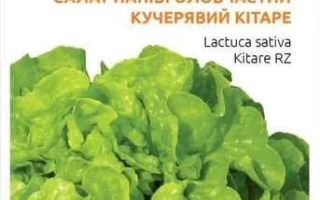
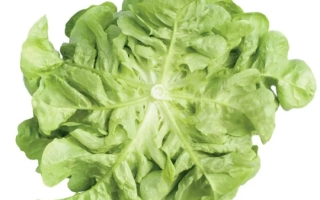
Santarinas (Santarinas) lettuce is a mid-season head lettuce variety of the Iceberg type, developed by the Dutch company Rijk Zwaan. This variety is distinguished by its high disease resistance and adaptability, allowing cultivation both in open ground from April to September and year-round in greenhouses and under cover. The maturation period is approximately 75-85 days from sowing, with rapid growth under various cultivation conditions. Heads are light green, round, symmetrical, weighing about 300-500 grams. The leaves are crisp, juicy, and have a mild flavor, along with a significant amount of vitamin A and folic acid. Santarinas is highly resistant to major lettuce diseases, including downy mildew (Bremia lactucae), internal necrosis, and aphids. It also features a long harvest period, high plasticity, and delayed bolting, ensuring stable production. The lettuce tolerates hot weather and light frosts down to -5 degrees, and exhibits high resistance to hollowing and head cracking. Due to its flat veins and closed head base, this variety is convenient for harvesting and packaging, and retains its quality during prolonged transport and storage. For successful cultivation of Santarinas, seeds should be sown at a depth of 1-1.5 cm at a germination temperature of about 16-17 degrees. Key agronomic practices include regular, moderate watering to prevent waterlogging and soil drying, as well as loosening, weeding, and thinning seedlings as needed. This lettuce has beneficial dietary properties and is ideal for fresh consumption, making it an excellent choice for salads and various culinary dishes.