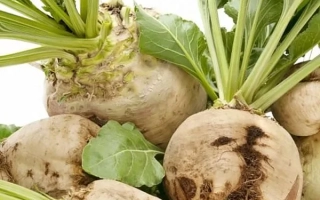
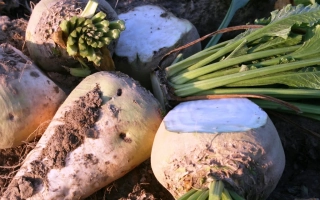
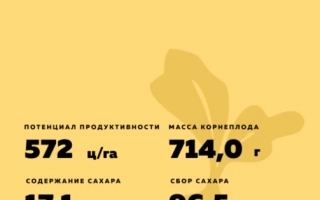
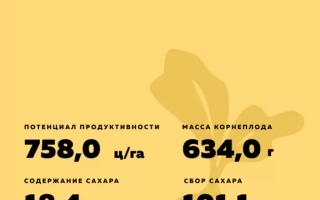
Sugar beet Barskyi is a high-yielding hybrid characterized by high productivity and resistance to various adverse factors. The roots of this variety have an oval-conical shape and are distinguished by high sugar content, reaching 18.3%. The plant exhibits good resistance to cercospora, rhizomania, drought, and cold, ensuring stable productivity under varying weather conditions. The leaf rosette is of medium size and dark green in color, while the root penetration into the soil reaches about 85%, contributing to good storage quality of the harvest.
Barskyi is recommended for cultivation in steppe and forest-steppe zones with a seeding rate of 1.4 p.e./ha and optimal plant density of approximately 101-115 thousand per hectare. Sugar beet of this variety is suitable for medium-term harvesting, allowing effective planning of agronomic measures and obtaining high-quality harvests.
In addition to the main product — sugar — sugar beet Barskyi is used in a complex manner: it yields pulp, molasses, defecation, and other by-products. Molasses is used in the production of alcohol, glycerin, citric acid, yeast, and organic acids, while defecation serves as a valuable fertilizer. Pulp is a nutritious feed for livestock. Additionally, sugar beet is used to produce ethanol, which serves as an alternative fuel replacing diesel and gasoline.