


SKU #66640
·
32 views
ZILANT
Rye
User rating
0 votes0% positive reviews
No ratings yet — be the first.
Type
Winter barley
Resistance to Falling
High
Registration year
2020
About product

The winter rye variety Zilant was created at the Tatar Research Institute of Agriculture by multiple individual-family selection from a complex hybrid population. The plants are of medium height — from 103 to 146 cm, with an intermediate bush type, semi-drooping ear of medium length and density. The grain is of medium size with a 1000-grain weight of 29 to 34 grams, and the aleurone layer has a da…
Type
Winter barley
Resistance to Falling
High
Registration year
2020
Description
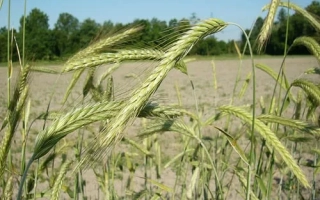
The winter rye variety Zilant was created at the Tatar Research Institute of Agriculture by multiple individual-family selection from a complex hybrid population. The plants are of medium height — from 103 to 146 cm, with an intermediate bush type, semi-drooping ear of medium length and density. The grain is of medium size with a 1000-grain weight of 29 to 34 grams, and the aleurone layer has a dark color. Leaves and stems have moderate pubescence and a waxy coating, which contributes to the plant's resistance to unfavorable conditions.
The variety is characterized by high winter hardiness and resistance to lodging due to strong straw. Drought resistance is at the level of the standard, and moderate susceptibility to brown rust is noted. Moreover, Zilant possesses field resistance to rust infections and ergot, ensuring yield stability under various climatic conditions. The maximum yield of the variety reached 71.1 centners per hectare, while the average yield in the Northern, Volga-Vyatsk, and Central Volga regions ranges from 31.5 to 38.3 centners per hectare.
The main direction for the use of the Zilant variety is bread-making, for which the grain possesses satisfactory bread-making qualities. Due to the combination of high productivity, resistance to unfavorable factors, and grain quality, this variety is recommended for cultivation in northern and Central Volga regions, providing stable and high-quality yield.
The variety is characterized by high winter hardiness and resistance to lodging due to strong straw. Drought resistance is at the level of the standard, and moderate susceptibility to brown rust is noted. Moreover, Zilant possesses field resistance to rust infections and ergot, ensuring yield stability under various climatic conditions. The maximum yield of the variety reached 71.1 centners per hectare, while the average yield in the Northern, Volga-Vyatsk, and Central Volga regions ranges from 31.5 to 38.3 centners per hectare.
The main direction for the use of the Zilant variety is bread-making, for which the grain possesses satisfactory bread-making qualities. Due to the combination of high productivity, resistance to unfavorable factors, and grain quality, this variety is recommended for cultivation in northern and Central Volga regions, providing stable and high-quality yield.
Crop & resistance
Crop
Disease resistance
Specifications hover over for a hint about the specification
Store offers
Prices are updated on loadLoading offers…
Aggregator catalog: prices are collected automatically from store websites, normalized by AI and converted at the current exchange rate. Before ordering, confirm the price and availability on the store's website. This block is not indexed by search engines — the data is loaded after the page opens.
Not yet комментариев. Be the first!


See also
Often considered together with this variety




Recently viewed
Products you’ve viewed on this site
Reviews · 0