


SKU #66606
·
42 views
UDINSKAYA
Rye
User rating
0 votes0% positive reviews
No ratings yet — be the first.
Type
Winter barley
Maturation Period
Early maturing variety
Registration year
1946
Store offers · 1 from 1 stores
Prices are updated on loadLoading offers…
Available at: Екомалина
Aggregator catalog: prices are collected automatically from store websites, normalized by AI and converted at the current exchange rate. Before ordering, confirm the price and availability on the store's website. This block is not indexed by search engines — the data is loaded after the page opens.
About product

Winter rye of the Udinskaya variety is an early-ripening grain variety developed by the FGBNU 'Buryat Scientific Research Institute of Agriculture' and registered in 1946. This variety is intended for cultivation in the East Siberian region, including such territories as the Irkutsk Oblast, Krasnoyarsk Krai, the Republic of Buryatia, the Sakha Republic (Yakutia), the Republic of Tuva, and the Repu…
Type
Winter barley
Maturation Period
Early maturing variety
Registration year
1946
Description
Winter rye of the Udinskaya variety is an early-ripening grain variety developed by the FGBNU 'Buryat Scientific Research Institute of Agriculture' and registered in 1946. This variety is intended for cultivation in the East Siberian region, including such territories as the Irkutsk Oblast, Krasnoyarsk Krai, the Republic of Buryatia, the Sakha Republic (Yakutia), the Republic of Tuva, and the Republic of Khakassia. Thanks to its early maturity, Udinskaya rye successfully adapts to compressed agricultural cycles, which is especially important for regions with a short growing season.
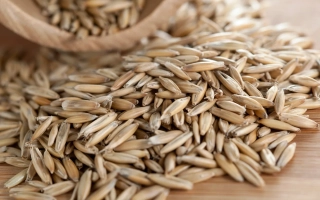
Rye as a plant is characterized by an annual development cycle and a tufted root system, ensuring good anchoring in the soil. The rye stem is hollow, straw-like, and divided by nodes, while the bush shape can vary from sprawling to upright, which affects yield. The spike consists of a spike axis and spikelets, and the grain can have diverse coloring — from white and yellow to brown-brown and purple. The Udinskaya variety is distinguished by high frost and drought resistance, as well as low requirements for soil conditions, which makes it universal for various climatic zones.
Growing winter rye of the Udinskaya variety allows obtaining stable yields in the complex climatic conditions of Eastern Siberia. Thanks to its adaptive properties and early maturity, this variety is widely used in the agricultural sector of the region, providing reliable raw material for grain production. Udinskaya rye has no patent on the product, which contributes to its wide spread and application in agriculture.
Rye as a plant is characterized by an annual development cycle and a tufted root system, ensuring good anchoring in the soil. The rye stem is hollow, straw-like, and divided by nodes, while the bush shape can vary from sprawling to upright, which affects yield. The spike consists of a spike axis and spikelets, and the grain can have diverse coloring — from white and yellow to brown-brown and purple. The Udinskaya variety is distinguished by high frost and drought resistance, as well as low requirements for soil conditions, which makes it universal for various climatic zones.
Growing winter rye of the Udinskaya variety allows obtaining stable yields in the complex climatic conditions of Eastern Siberia. Thanks to its adaptive properties and early maturity, this variety is widely used in the agricultural sector of the region, providing reliable raw material for grain production. Udinskaya rye has no patent on the product, which contributes to its wide spread and application in agriculture.
Crop & resistance
Crop
Specifications hover over for a hint about the specification
|
Type
Type
Galia (Galia) type — relatively new, of Israeli origin, although there are indications that this variety may originate from Spain. The fruits of this type are round or oval, weighing about 1 kg. The surface is smooth, covered with a delicate, connected netting, turning yellow whe... |
|
|---|---|
|
Maturation Period
Maturation Period
Vegetation period from emergence to technical maturity 30-50 days. |
Early maturing variety |
| Registration year | 1946 |
| Catalog | Catalog → Rye |
| Legal data |
Show · 1 |
| Country | Russia |
Not yet комментариев. Be the first!


See also
Often considered together with this variety





Recently viewed
Products you’ve viewed on this site
Reviews · 0