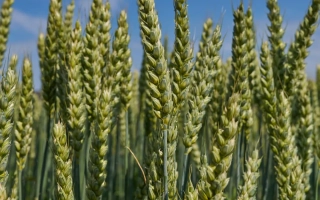
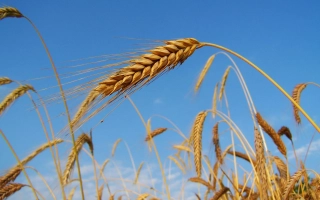
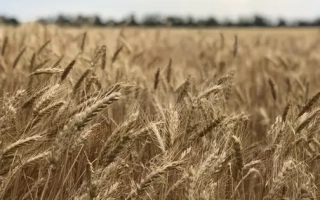
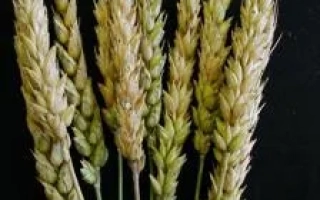
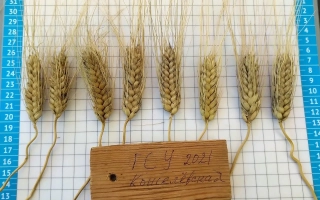
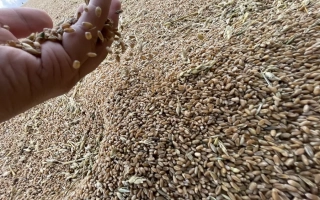
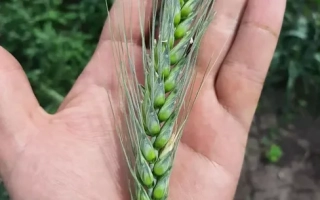
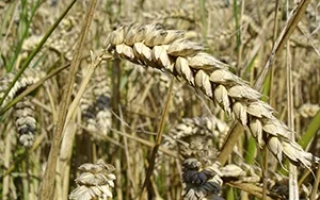
Wheat variety Rosinka is a medium-early soft wheat (Triticum aestivum L.) variety with universal use, included in the State Register in several regions of Russia and Western Siberia. Plants have semi-dwarf or medium height, with erect or semi-erect stems. The stem is hollow, with a distinct waxy coating on upper internodes, and the flag leaf has a strong waxy coating on the sheath. The ear is cylindrical, of medium density, 8–12 cm long, white or straw-yellow in color, with moderate waxy coating and awns. The grain is elongated, red in color, medium size, with hairy base and medium groove. The variety is characterized by good resistance to lodging and shattering, as well as moderate resistance to root rot, septoria, fusarium, brown rust, and powdery mildew. However, it is susceptible to stem rust and some rust forms, therefore seed treatment and fungicide applications are recommended. Rosinka exhibits high drought tolerance and winter hardiness, allowing successful cultivation in various climatic conditions, including the North Caucasus, Lower Volga, West Siberian, and East Siberian regions. The cultivation technology is universal: it can be sown after any preceding crops with intensive methods and optimal doses of mineral fertilizers. To prevent lodging at high nutrient levels, retardants are recommended. The seeding rate is 4.5–5.5 million germinating seeds per hectare. To achieve high yields, 2–3 plant treatments against pests and diseases, as well as three applications of nitrogen fertilizers for improved grain quality, are necessary. The variety yields high yields, surpassing regional standards, and the grain has satisfactory baking qualities, with protein content of 13.5–14.7% and good rheological properties of dough.