
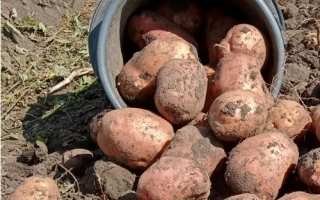
SKU #44170
·
66 views
Potato Horlica
Potato
User rating
0 votes0% positive reviews
No ratings yet — be the first.
Direction
Silage
Registration year
1996
Prices in stores
from1.35 €per 1 kg
pack from 1.35 € per 1 kg
1 offer from 1 store
Store offers · 1 from 1 stores
Prices are updated on loadLoading offers…
Available at: Еко семена · pchelosad.com.ua · Sadivnyk
Aggregator catalog: prices are collected automatically from store websites, normalized by AI and converted at the current exchange rate. Before ordering, confirm the price and availability on the store's website. This block is not indexed by search engines — the data is loaded after the page opens.
About product
A high-yielding forage potato variety specifically engineered to provide consistent dry matter for livestock feed requirements.
Direction
Silage
Registration year
1996
Description
Forage Potato Production: Strategic Choice for Livestock
The «Horlytsia» variety, developed by the Institute of Potato Research of the NAAS, is a purpose-built solution for agricultural enterprises integrating forage production into their core operations. Unlike table varieties bred for culinary appeal, Horlytsia focuses on maximizing biomass yield and maintaining nutrient density, specifically designed to meet the rigorous demands of large-scale animal feed stocks.
Practical Scenarios for Farm Operations
- Optimizing Feed Ratios: This variety is optimized for long-term storage, providing a reliable source of dry matter. Its biological profile makes it a key component for winter feeding, ensuring consistent nutritional value for livestock throughout the colder months.
- Operational Reliability: Adapted to the soil and climatic diversity of Ukraine, Horlytsia minimizes the risks associated with large-scale cultivation. Agronomists value it for its predictable growth cycles, allowing for precise planning of harvesting timelines and total storage requirements.
- Reduced Post-Harvest Losses: High dry matter concentration contributes to excellent storage durability. For farms managing their own supply chain, this translates into lower wastage and a more cost-effective feed management system.
By integrating Horlytsia into the rotation, managers can effectively increase the caloric output per hectare for non-market applications. It serves as a robust pillar for any farming business aiming to achieve self-sufficiency in high-quality forage production.
Crop & resistance
Crop
Specifications hover over for a hint about the specification
|
Direction
Direction
Existing varieties and types of cabbage are grown for fresh consumption, long-term storage, and technical processing. |
|
|---|---|
| Registration year | 1996 |
| Catalog | Catalog → Potato |
| Legal data |
Show · 1
|
| Country | Ukraine |
Not yet комментариев. Be the first!
Alternatives
Seed potatoes · similar varieties




See also
Often considered together with this variety




Recently viewed
Products you’ve viewed on this site
Reviews · 0