


SKU #43991
·
93 views
Corazon
Potato
AGRICOUser rating
0 votes0% positive reviews
No ratings yet — be the first.
Direction
Table Potato
Beginning of fruiting
55-65 days
Corm; shape
Oval elongated
Corm; skin color
Red
Store offers · 5 from 4 stores
Prices are updated on loadLoading offers…
Available at: Agrohim · Agroshop · Green Optima · Leto · Mir-roz · Все Росте
Aggregator catalog: prices are collected automatically from store websites, normalized by AI and converted at the current exchange rate. Before ordering, confirm the price and availability on the store's website. This block is not indexed by search engines — the data is loaded after the page opens.
About product

Corazon potato is a promising early table variety developed by Dutch breeders and adapted for cultivation in Ukraine. The vegetation period is 50-60 days, allowing for an early harvest. The variety is well-suited for sandy soils and can be grown without additional irrigation. For optimal plant development, it is recommended to use deep and non-dense planting, as well as slightly increased nitrogen…
Direction
Table Potato
Beginning of fruiting
55-65 days
Corm; shape
Oval elongated
Corm; skin color
Red
Description
Corazon potato is a promising early table variety developed by Dutch breeders and adapted for cultivation in Ukraine. The vegetation period is 50-60 days, allowing for an early harvest. The variety is well-suited for sandy soils and can be grown without additional irrigation. For optimal plant development, it is recommended to use deep and non-dense planting, as well as slightly increased nitrogen fertilizer rates under standard feeding. Corazon has medium sensitivity to metribuzin and requires timely fungicide treatments to protect against late blight, scab, and fusarium. It is resistant to late blight of tubers, viral diseases, and golden nematode, which simplifies care and increases harvest reliability.
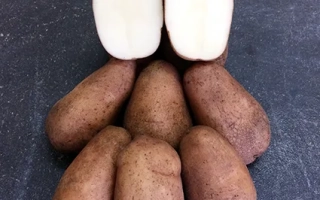
The tubers of Corazon potato have elongated-oval shape, uniform and large — the weight of one tuber ranges from 80 to 140 grams. The skin is smooth, shiny, and red, while the flesh is light yellow, does not darken or lighten after cooking. The variety belongs to the culinary type AV, indicating universal use: the potato is suitable for boiling, baking, stewing, and frying. When thermally processed, tubers retain their shape, the flesh becomes crumbly at the end of boiling and soft with a crisp crust when fried. High dry matter content — up to 18% — ensures a pleasant taste and good texture. Corazon is resistant to mechanical damage during harvesting and does not darken during storage, making it attractive for packaging and retail sales.
The Corazon variety is characterized by high yield, which, under proper agronomic practices and favorable conditions, can reach 30 to 45 tons per hectare. The potato can be stored for up to 6 months under proper temperature conditions, allowing for prolonged use. Due to the combination of high productivity, disease resistance, and excellent taste qualities, Corazon is an excellent choice for both agronomists and end consumers seeking a quality and flavorful product.
The tubers of Corazon potato have elongated-oval shape, uniform and large — the weight of one tuber ranges from 80 to 140 grams. The skin is smooth, shiny, and red, while the flesh is light yellow, does not darken or lighten after cooking. The variety belongs to the culinary type AV, indicating universal use: the potato is suitable for boiling, baking, stewing, and frying. When thermally processed, tubers retain their shape, the flesh becomes crumbly at the end of boiling and soft with a crisp crust when fried. High dry matter content — up to 18% — ensures a pleasant taste and good texture. Corazon is resistant to mechanical damage during harvesting and does not darken during storage, making it attractive for packaging and retail sales.
The Corazon variety is characterized by high yield, which, under proper agronomic practices and favorable conditions, can reach 30 to 45 tons per hectare. The potato can be stored for up to 6 months under proper temperature conditions, allowing for prolonged use. Due to the combination of high productivity, disease resistance, and excellent taste qualities, Corazon is an excellent choice for both agronomists and end consumers seeking a quality and flavorful product.
Crop & resistance
Crop
Disease resistance
Pest resistance
Specifications hover over for a hint about the specification
|
Direction
Direction
Existing varieties and types of cabbage are grown for fresh consumption, long-term storage, and technical processing. |
|
|---|---|
|
Beginning of fruiting
Beginning of fruiting
The early maturity of watermelon varieties mainly depends on the duration of growth and fruit ripening phases, rather than the timing of female flower blooming. Many varieties, ripening at different times, begin to bloom almost simultaneously. Approximately 30 days after fruit se... |
55-65 days |
| Corm; shape | |
| Corm; skin color | |
| Corm; flesh color | |
| Corm; skin structure | |
| Corm; mass | 50-130 grams |
| Dry Matter Content | 18-19% |
| Registration year | 2023 |
| Catalog | Catalog → Potato |
| Manufacturer | AGRICO |
| Legal data |
Show · 11
|
| Country | Netherlands |
Not yet комментариев. Be the first!
Alternatives
Seed potatoes · similar varieties





See also
Often considered together with this variety







Recently viewed
Products you’ve viewed on this site
Reviews · 0