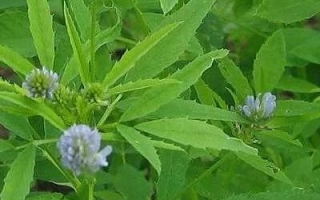
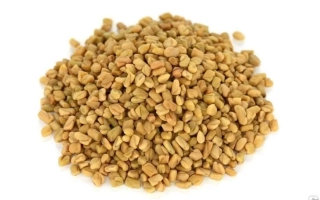
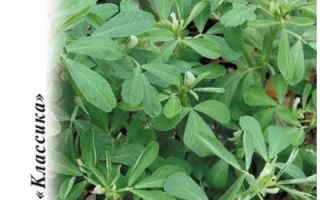
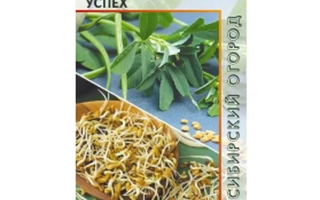
Fenugreek (shambala, helba, galgal) – an annual legume plant growing 40–70 cm tall with complex leaves and yellow flowers. It grows widely in tropical regions such as Turkey, Iran, Egypt, and India, where it blooms in May–June. Fenugreek seeds are rich in galactomannan, which suppresses appetite and glucose levels, improves cognitive function, reduces "bad" cholesterol, and strengthens the vascular system. Thanks to these properties, the seeds aid in weight loss, improve the condition of skin, nails, and hair, and support immunity by exerting antiviral and antibacterial effects.
In medical practice, fenugreek is valued as a remedy for women: it normalizes hormonal balance, enhances lactation, helps with polycystic ovary syndrome, and during menopause. For men, the plant stimulates testosterone production and reduces the risk of prostate adenoma. However, its use is contraindicated with elevated prolactin and estrogen levels, during pregnancy (first 8 months), insulin-dependent diabetes, thyroid gland pathologies, and asthma.
Culinarily, fenugreek is used as a seasoning for meat dishes and other recipes. Seeds can be prepared as tea or infusions, added to dough, and combined with other spices. In cosmetology, seeds are used in face and hair masks due to their nourishing properties. To maintain quality, fenugreek is stored in a dry, cool place in airtight packaging. The nutritional value of seeds per 100 g includes 6.4 g of fats, 23 g of proteins, and 58.4 g of carbohydrates, as well as potassium, calcium, magnesium, iron, phosphorus, sodium, zinc, and vitamins C, B1, B2, B9, and PP.