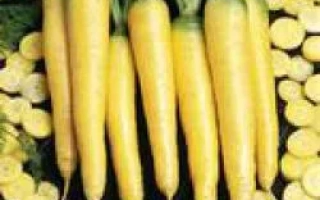
Canada F1 carrot is a late Dutch hybrid of the Chantenay type, developed by breeders of the Bejo Zaden company from the Netherlands. This variety is characterized by stable high yield and is adapted to various climatic conditions, especially recommended for southern and dry regions. The vegetation period is about 125-135 days, during which 4 to 7.5 kilograms of roots can be obtained per square meter. The seeds have practically 100% germination, and the seeding rate is 0.9-1.0 million seeds per hectare. The hybrid is not demanding in cultivation conditions, but to achieve maximum yield, it is recommended to follow agronomic practices, including soil loosening and watering, as well as crop rotation with predecessors such as potatoes, tomatoes, onions, and cucurbits. Canada F1 carrot roots have a conical shape with a slightly pointed tip and a smooth surface. The length of the roots reaches 16-22 cm, the diameter — 4-6 cm, and the weight varies from 120 to 400 grams. The color of the roots is intense orange, uniform, with dense and smooth flesh structure, which is almost indistinguishable in color from the core. The carrot contains high levels of carotene — about 22 mg per 100 g — and has a sweet taste with sugar concentration around 8%. Due to these qualities, the hybrid is ideal for children’s purees, juices, fresh consumption, and industrial processing. Canada F1 exhibits high resistance to most diseases, including cercospora, black leg, blossom end rot, and rot, which significantly simplifies care and reduces crop losses. The carrot tolerates cultivation on various soil types, including loose sandy, loamy, heavy clay, and chernozem soils, though lighter and slightly acidic soils are preferred. Yield and quality of the roots are preserved during proper storage in a dark, cool place for several months, making this hybrid popular among farmers and agricultural professionals.