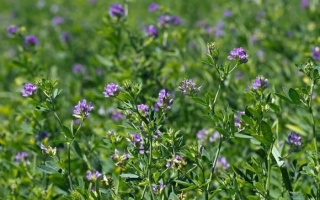
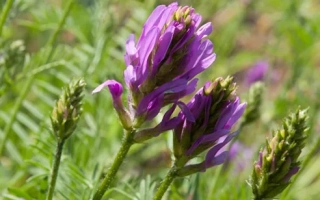
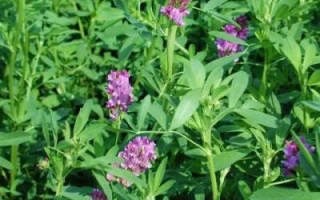
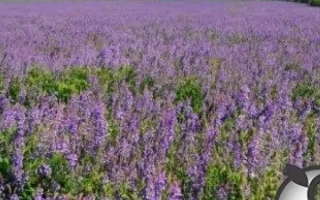
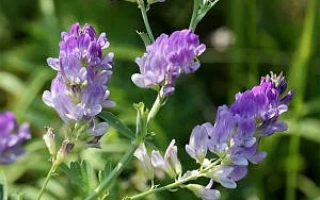
Lubava is a lucerne variety developed by family selection from the collection sample K-32861, followed by open pollination with high-yielding varieties and a single selection based on root system. This variety is distinguished by high winter hardiness, drought and seed pest resistance above average, medium resistance to fungal diseases, and high resistance to root rots. During summer on dry land, Lubava yields 2-3 cuttings, and under irrigation — 4-5 cuttings, ensuring high yields of green mass, especially in the first cutting.
The average yield over test years was 642 ц/га of green mass, 142.5 ц/га of hay, and up to 7 ц/га of seeds. High seed yields are achieved with spring and summer sowings on irrigated land. Thanks to these characteristics, the Lubava variety is a reliable and productive choice for cultivation both on dry land and under irrigation.
In addition, lucerne is widely used not only as a forage crop for animals, but also as microgreens, which are a true vitamin bomb and belong to superfoods. Microgreens of lucerne have a mild, almost neutral taste reminiscent of young green peas and a tender texture. They are used not only in food, but also in making masks, decoctions, and compresses. For growing lucerne microgreens, a warm, dark place with moist soil, regular ventilation, and lighting are required, as the plant loves light and requires active rotation of the tray.