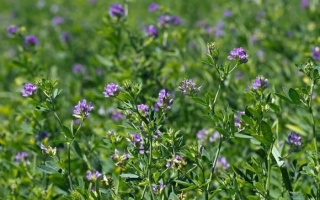
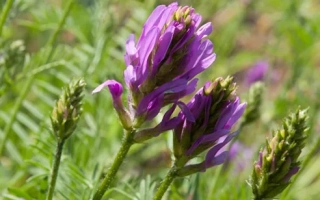
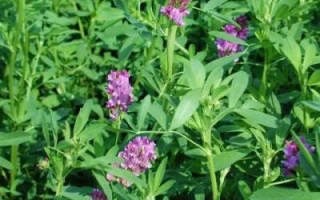
Lucerne Andi — a long-lived, cold-tolerant forage crop from the legume family, widely used in agriculture due to its unique properties and high nutritional value. The plant has a well-developed root system that allows it to effectively utilize water and nutrients from deep soil layers, providing drought resistance and the ability to withstand both high and low temperatures. The tall, upright bush reaches a height of 56 to 97 cm, with broad-lanceolate leaves and large pods, and its medium-sized seeds weigh approximately 2.1–2.2 grams per 1,000 seeds. The period from the start of spring growth to full seed maturity is 118–125 days.
Lucerne Andi not only serves as valuable feed for livestock, providing high-quality nutrition, but also performs an important agronomic function by improving soil fertility through nitrogen accumulation in roots and crop residues. Due to its dense root system, the plant protects soil from erosion and is an excellent predecessor for cereals and other crops. High winter hardiness (96–98%) and resistance to diseases and pests make this crop reliable and long-lasting.
Lucerne sowing is recommended in early spring, although summer sowing is possible only with adequate soil moisture. The crop thrives on various soil types, including clayey and clay soils with low sand content. Livestock grazing on lucerne fields during the vegetative period is possible, contributing to the production of high-quality forage and, consequently, improved livestock product quality.