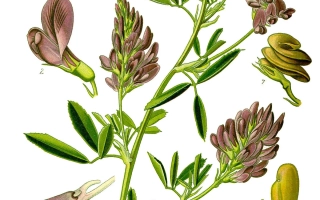
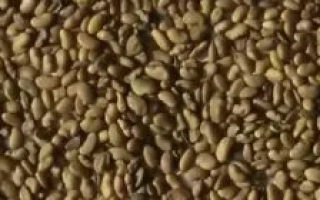
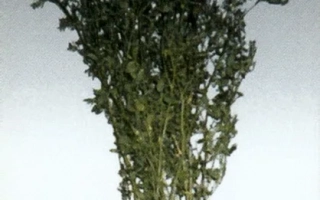
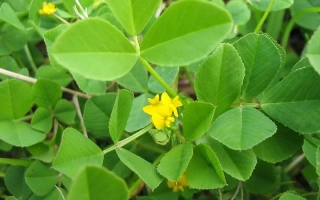
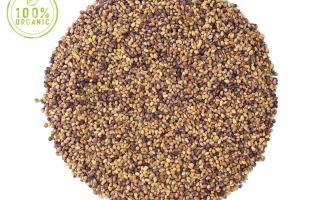
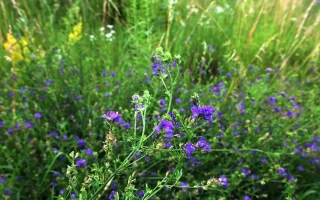
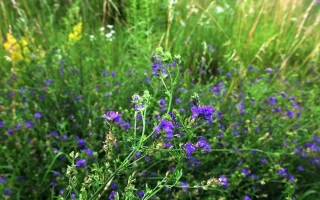
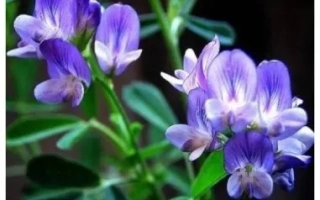
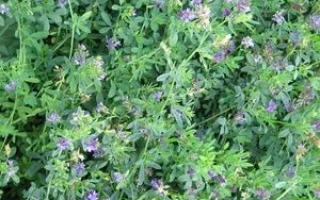
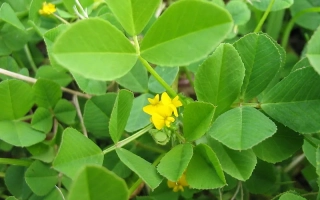
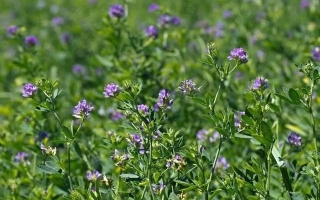
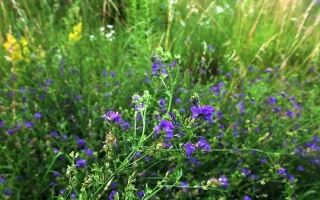
Lucerne 'Lidia' is a high-yielding forage variety developed through hybridization and multiple selections of the best biotypes for productivity and self-pollination, followed by artificial population formation from the 'Vera' variety. This variety has passed state trials and has been included in the Ukrainian Variety Register since 2005. Plants reach a height of 90–120 cm, have upright stems and green leaves without hairs. Inflorescences are multibloomed spikes with color ranging from light blue to dark purple. The 1000-seed mass is 2.05 g, and the period from sowing to harvest maturity is 123 days. Dry matter yield reaches 12.6 t/ha, and seed yield reaches 5.0 centners/ha.
The main advantages of lucerne 'Lidia' include high productivity potential, slender yet strong stems, high protein content, and low leaf mass losses due to high resistance to lodging. These qualities make this variety especially valuable for forage use in agriculture. Lucerne is one of the main legume crops in the forage conveyor system and one of the most valuable grasses for field sowing.
In addition, lucerne 'Lidia' exhibits high adaptability to various agroclimatic conditions in Ukraine due to its drought and cold resistance. This enables the variety to effectively realize its productive potential across different regions of the country, providing stable and high-quality feed for animals.