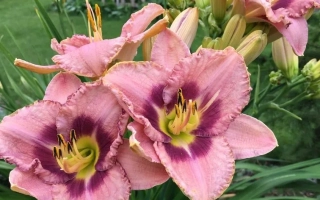
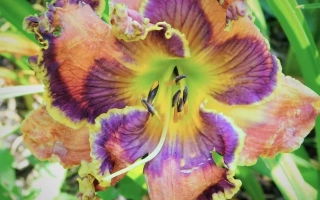
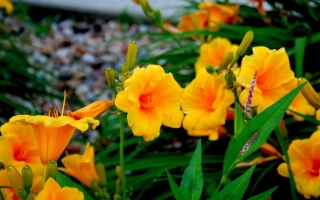
The daylily, also known by the Latin name Hemerocallis, is a perennial cold-hardy plant widely used in landscape design due to its variety of shapes and shades. There are more than thirty thousand varieties, including double, spider, and other unusual flower shapes, which can be orange, golden, brown, dark, lavender, white, pastel, pink, and red. Daylily flowering lasts from late June to early August, and with reblooming the plant can produce up to 20-30 flower stalks per season. One of the bright representatives is the 'Pardon Me' variety with bright red flowers about 7 cm in diameter and a night scent, flowering from July to September. For successful growing of daylilies, it is recommended to choose sunny or slightly shaded areas with well-drained, fertile loamy soils enriched with organic matter, compost, peat, and phosphorus-potassium fertilizers. Planting is best done in spring or in August, placing rhizomes at a depth of 3-4 cm, while after planting watering should be regular during the first week, then moderate. It is important to avoid water stagnation and not use fresh manure. To maintain plant health, fertilizers should be applied twice a season: in spring - nitrogenous, in autumn - potassium-phosphorus. Peat mulching helps retain moisture and protect the root system from overheating, as well as contributes to the plant's cold hardiness. Daylilies are distinguished by their unpretentiousness in care, resistance to diseases and pests, and ability to grow in one place for up to 15 years. For reproduction, bush division is used, dividing rhizomes into several parts with rosettes of leaves. After flowering, stems are cut to 5-10 cm above ground, and in spring old foliage is removed. Daylilies blend well with other garden plants, such as hostas, irises, astilbes, and hydrangeas, allowing for creating harmonious and bright compositions in flowerbeds, borders, and along water bodies.