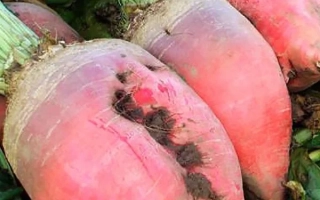
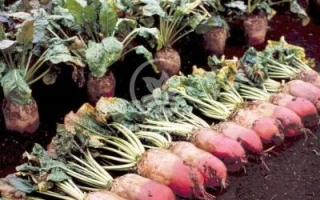
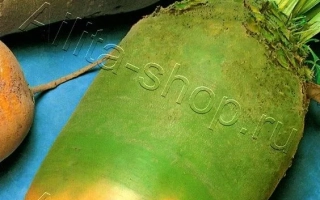
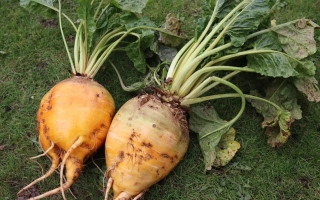
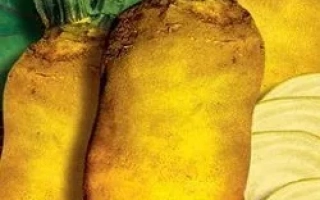
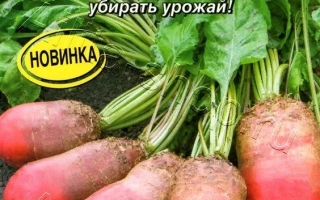
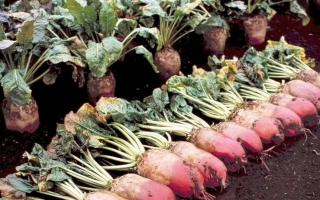
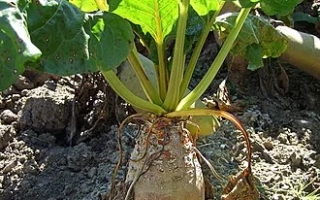
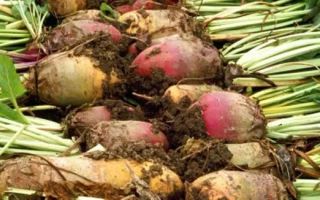
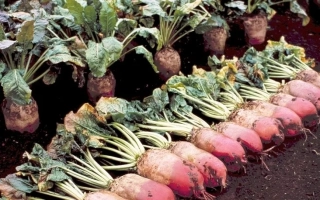
Round Sugar Beet 0143 is a fodder beet variety distinguished by the round shape of its root crop, most of which remains above the soil surface. The root crops contain 15–17% dry matter, ensuring high nutritional value. The variety was registered in 1965 and recommended for cultivation in various regions of Russia and Kazakhstan, including Orenburg, Chelyabinsk, Kemerovo, Novosibirsk, and Omsk regions, as well as the Bashkortostan, Altai, Buryatia, Sakha (Yakutia), Tuva, and Khakassia republics. Successful cultivation requires fertile soil with a deep arable layer.
The variety's vegetation period is 125–150 days, which is 25–30 days shorter than that of sugar beet, allowing for use in shorter timeframes. Seeds germinate at temperatures of 2–5°C, while viable seedlings appear at 6–7°C. Leaves of adult plants are resistant to short-term morning frosts down to -6°C, however, excavated root crops are damaged at temperatures below -2°C.
Fodder beet Round Sugar Beet 0143 is widely used in animal husbandry, especially with a silage type of feeding. It contains a significant amount of dry matter and alkaline minerals, which contribute to neutralizing acids in silage, improving its quality. Despite low protein, calcium, and phosphorus content, this variety ensures high yields—up to 40–60 tons per hectare. When feeding, root crops are recommended to be crushed and feeding norms strictly observed to avoid contamination and ensure maximum benefit for animals.