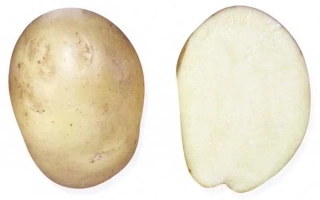
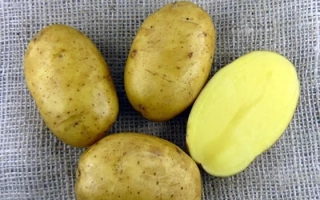
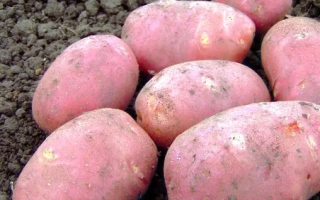
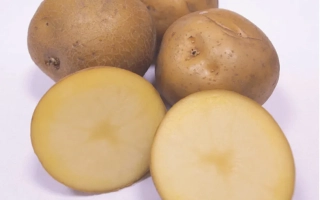
Mozart — a mid-late potato variety for table use, developed by Dutch breeders, with a vegetation period of about 110-120 days. Plants are upright or semi-upright, medium to tall, with large or medium dark green leaves and slightly wavy edges. Tubers are oval-shaped, medium-sized, with a thin, dense reddish-pink skin and shallow, few eyes. Flesh is yellow, does not darken during cleaning or cooking, has a rich flavor, and contains 14.6 to 16.9% starch, as well as elevated levels of protein and valuable amino acids. The potato is slightly mealy, making it versatile for various culinary purposes.
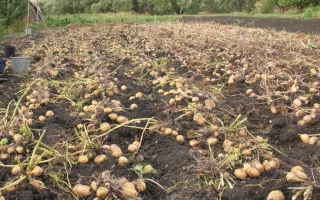
The variety is characterized by high yield — average yield is about 400 centners per hectare, with maximum yield potentially exceeding 600 centners. Each plant yields 8 to 11 tubers, predominantly large and marketable, with a marketability of up to 98%. Mozart is resistant to late blight, potato cyst nematode, and golden potato cyst nematode, and has moderate resistance to phytophthora. The potato tolerates short-term drought and increased temperatures but is sensitive to frost. Tubers are not damaged during harvesting, store well, and retain their consumer qualities, ensuring good transportability.
When growing this variety, its characteristics should be considered: tubers develop rapidly in late maturation stages, and their dormancy period is long, so seed material should be prewarmed before planting. For Mozart, nitrogen fertilization should be reduced by approximately 30% from average rates for mid-late varieties, while potassium fertilization should be increased. Tubers typically measure 35–55 mm, dry matter content reaches 20.3%, and dormancy period is about 7.5 weeks. All these characteristics make Mozart an excellent choice for cultivation with high flavor and market qualities.