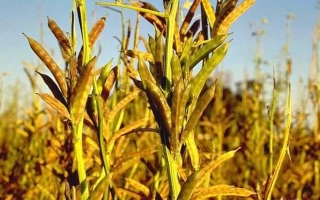
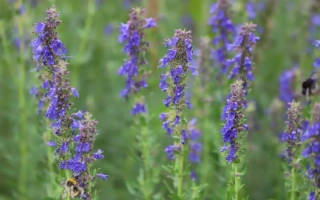
Guar (Cyamopsis tetragonoloba L.) – an annual leguminous plant possessing many useful properties and a wide range of applications. In India, it is traditionally grown as a fodder plant with high nutritional value: the green mass is used as feed for cattle, poultry, and fish, while young beans can be consumed by humans. Guar seeds contain a significant amount of protein – Churi flour reaches 40% protein, and Korma granular feeds reach 50% and 60% respectively. Seed shells and embryos are used as high-protein ingredients in animal feeding. With thermal processing and the addition of enzymes, the influence of anti-nutritional substances present in raw feed can be neutralized.
One of the key products of guar is guar gum, extracted from the seed endosperm. This natural resin is widely used around the world as a thickener and stabilizer: in the food industry, it is added to sauces, desserts, and beverages; in cosmetics – in creams and gels; in the textile and paper industries – to improve the properties of fabrics and paper. In recent decades, guar gum has found application in the oil industry, where it serves as a fluid loss modifier and stabilizer for drilling fluids.
Cultivation of guar in Russia is becoming an urgent issue due to the growing demand for guar gum both within the country and abroad. At the Institute of Plant Genetic Resources (VIR), more than 100 samples of guar collected from around the world are stored, including improved varieties bred in the USA. These collection seeds maintain high germination even after decades of storage and are successfully grown in southern regions of Russia, where climatic conditions are suitable for their growth.
Research on the adaptation of new guar varieties to the forest-steppe zone was conducted in Ingushetia from 2021 to 2023. Morphological traits, biometric parameters, and phenological stages of plants were studied. Based on the obtained data, samples with the most economically valuable characteristics were identified: high yield, resistance to adverse climatic conditions, and rich seed composition. Guar is considered a multi-purpose crop capable of replacing imported products in the field of fodder, cover crops, and a source of guar gum.
The process of seed cleaning and sorting is also important for ensuring high product quality. It includes the removal of undesirable impurities, classification by size and quality, which allows obtaining homogeneous batches of seeds for subsequent sowing or processing into feed mixtures and gum.
Thus, guar is a valuable agricultural crop with a wide range of applications – from fodder to industrial thickeners. Its cultivation in Russia opens up prospects for reducing dependence on imports and developing new economic sectors.